Planning
Best Time to Go Glamping in Japan: A Season-by-Season Guide
This article contains affiliate links. If you book through them, I may earn a small commission at no extra cost to you. Learn more
The Short Answer
If you want the easy version: late April to early June and October to mid-November are the sweet spots. Mild weather, beautiful scenery, and fewer crowds than the summer peak.
But here's the thing I tell every guest at the resort where I work: there is no bad season for glamping in Japan — only a wrong match between the season and what you're hoping for. Unlike tent camping, glamping units have heating, air conditioning, and real beds, so the weather shapes the experience, not your comfort.
So instead of one answer, let me walk you through the year the way I see it on the ground.
Spring (March – May): Blossoms and Fresh Starts
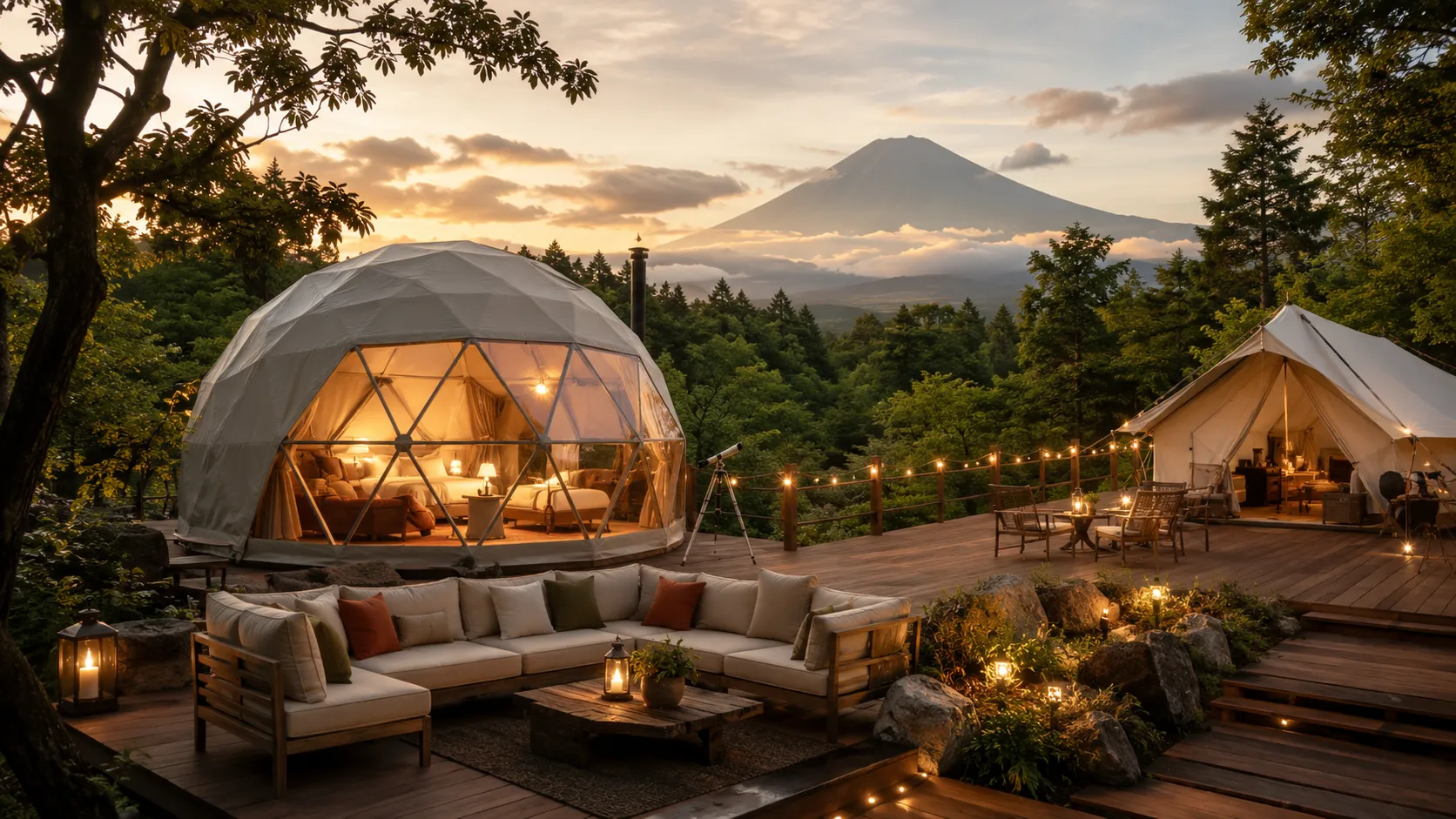
Spring is when Japan is at its most famous — cherry blossoms sweep the country from late March to mid-April, and glamping puts you right under them instead of fighting crowds in a city park.
What's great:
What to know:
Best regions: Chiba (warmest, earliest blossoms) and Izu. Fuji-area resorts bloom later, into mid-April.
Summer (June – August): Lakes, Stars, and BBQ Season
Summer is peak glamping season for Japanese families, and it's the liveliest time at any resort. It starts with the rainy season (roughly mid-June to mid-July) — soft, misty weeks that are actually beautiful in the forest — then bursts into hot, bright high summer.
What's great:
What to know:
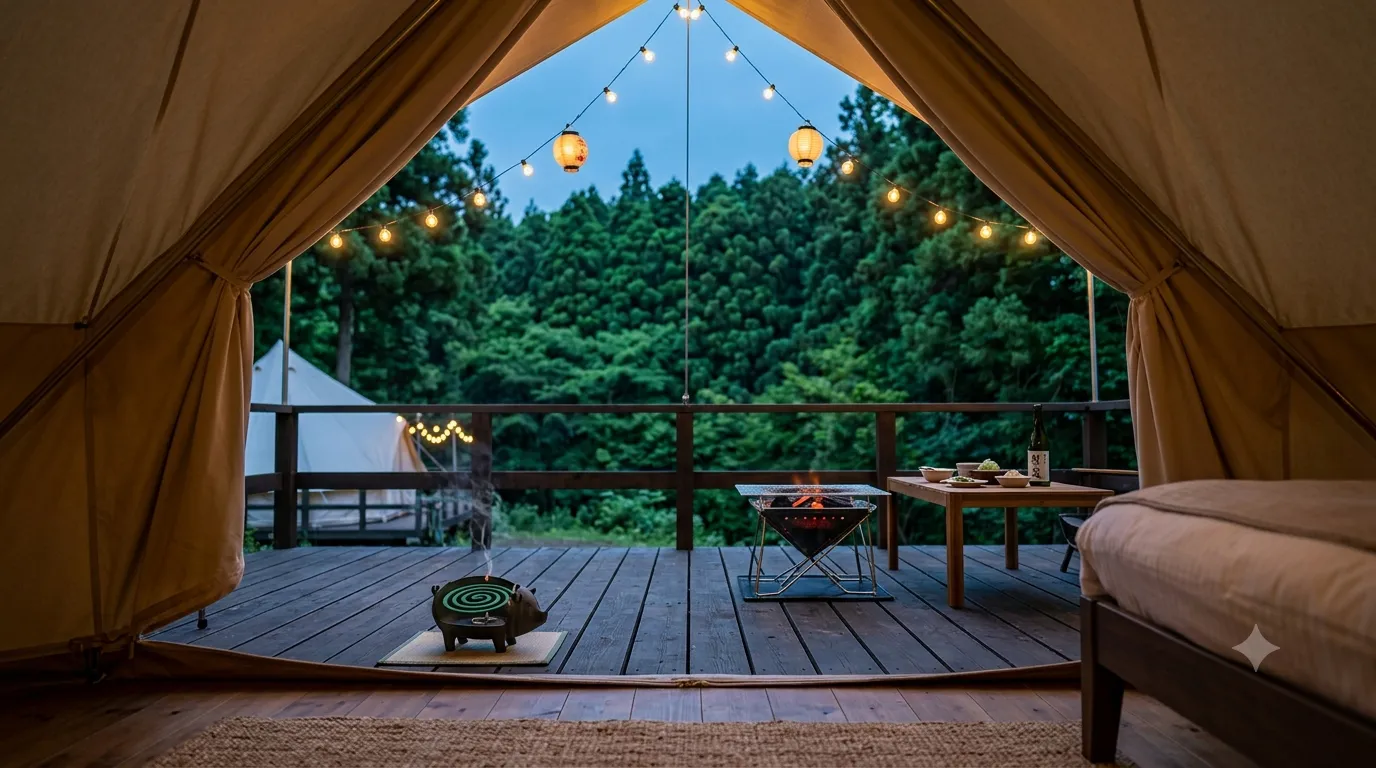
Best regions: Fuji Five Lakes and highland resorts for cool air; Chiba's coast for ocean activities.
Autumn (September – November): The Insider's Favorite
Ask anyone who works in Japanese outdoor tourism and most of us will say the same thing: autumn is the best-kept secret. The summer crowds vanish, the air turns clear and dry, and from mid-October the forests turn red and gold.
What's great:
What to know:
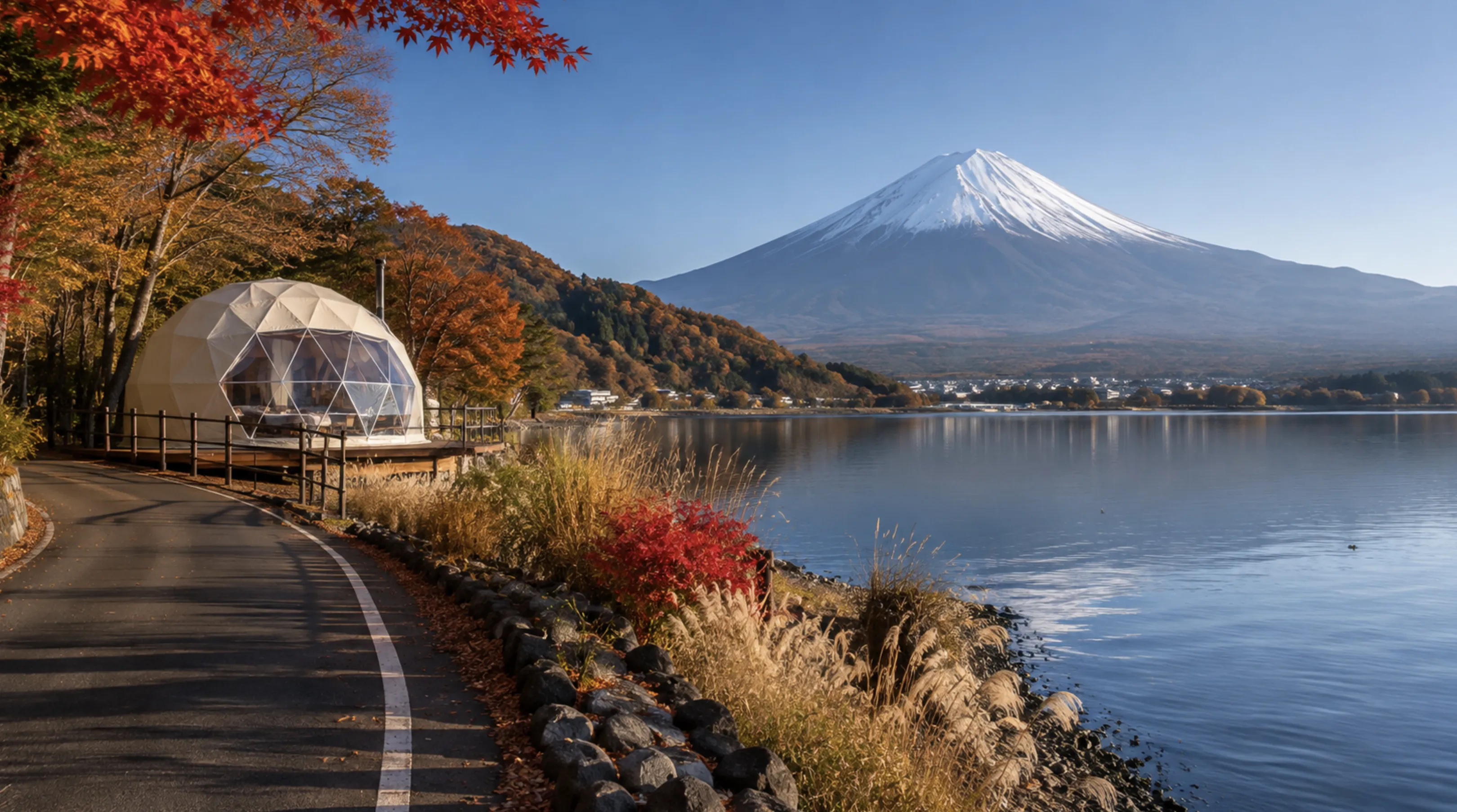
Best regions: Yamanashi and the Fuji area for foliage with a mountain backdrop; Ibaraki for quiet countryside colors at lower prices.
Winter (December – February): Snow, Silence, and the Clearest Fuji
Winter glamping surprises people. The resorts are quiet, the air is the clearest of the entire year, and sitting by a wood stove inside a heated dome while frost settles outside is genuinely magical.
What's great:
What to know:
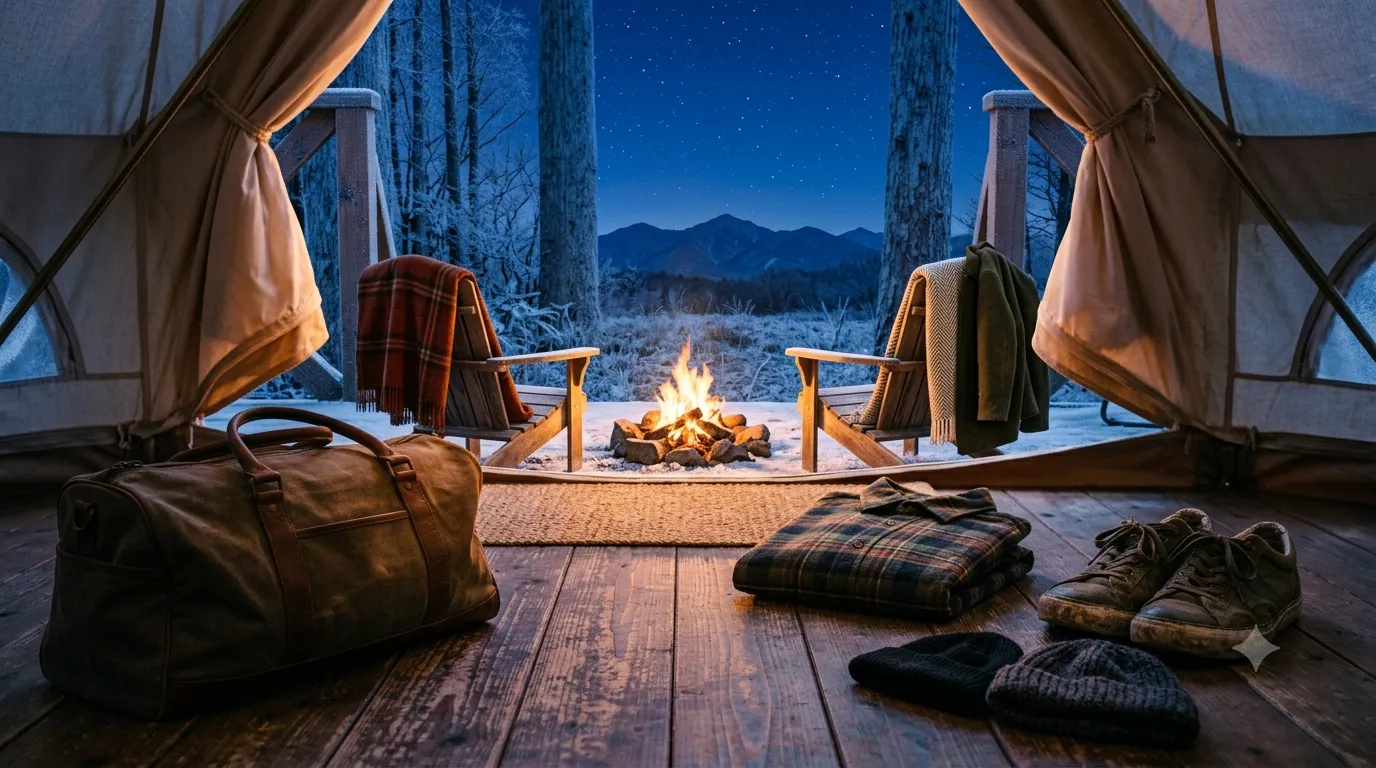
Best regions: Fuji Five Lakes for the guaranteed views; Chiba for the mildest winter glamping in the Tokyo area.
Month-by-Month Cheat Sheet
| Month | Crowds | Weather | Highlight |
|---|---|---|---|
| Jan–Feb | Low | Cold, very clear | Best Fuji views, lowest prices |
| Mar | Low–Mid | Cool | Early blossoms (Chiba) |
| Apr | High | Mild | Cherry blossoms everywhere |
| May (GW) | Very high | Warm | Golden Week — book early or avoid |
| Jun | Low | Rainy, green | Fireflies, misty forests, good deals |
| Jul–Aug | Very high | Hot, humid | Lake sports, fireworks, peak BBQ season |
| Sep | Mid | Warm, typhoon risk | Quiet shoulder season |
| Oct–Nov | High (weekends) | Crisp, clear | Autumn foliage, reliable Fuji views |
| Dec | Low | Cold, clear | Silent resorts, winter stargazing |
When to Book
A simple rule of thumb from the reservations side:
For accommodation, Booking.com lists many Japanese glamping resorts with English support and flexible cancellation — useful in typhoon-season September especially.
For activities and tours to pair with your stay — from Fuji day trips to kayaking sessions — GetYourGuide is the easiest option for foreign visitors, with English booking and free cancellation on most tours.
Common Questions About Timing
What is the single best month for glamping in Japan?
Late October to mid-November. Autumn foliage, the clearest Mount Fuji visibility of the warm half of the year, comfortable days, and crisp evenings that make a fire pit worthwhile. If you can only pick one window, that's it.
When is it least crowded?
June (the rainy season) and weekdays in winter. Both are genuinely quiet and noticeably cheaper. June gets a bad reputation, but misty forests are beautiful and fireflies appear in early summer — it's the most underrated month of the year.
When should I avoid?
Three periods sell out and spike in price: Golden Week (late April to early May), Obon (mid-August), and autumn foliage weekends (late October to mid-November). These aren't bad times to go — just book two to three months ahead, or shift to a weekday.
When can I actually see Mount Fuji clearly?
Winter mornings, by a wide margin. Dry, clear air from December to February means the snow-capped peak is visible most mornings. Summer afternoons are the worst — Fuji is often completely hidden behind cloud. Whatever season you choose, the early morning is always your best window.
Is glamping in Japan possible in winter?
Yes, and it's excellent. Tents and cabins are heated, and many resorts add wood stoves, hot pot dinners, and kotatsu tables. You get the clearest Fuji views, the lowest prices, and real availability. Just check the resort stays open year-round, and pack for standing outside at 0°C — see my packing guide.
How far ahead should I book?
Does the rainy season ruin a glamping trip?
Less than you'd expect. Every site has a covered BBQ area, tents are dry and heated, and rain on a canvas roof is genuinely pleasant. What you lose is the mountain view; what you gain is a quiet resort at a lower price.
So, When Should You Go?
Whenever you land, the beds are warm, the BBQ is excellent, and the nature does the rest. If you're still deciding where to go, start with the region guides on this site — and enjoy the planning. It's part of the trip.
Ready to explore Japan's outdoors?
Book your stay and your activities with English-language support, international payments, and flexible cancellation.