Activities
7 Unique Outdoor Experiences in Japan You Can't Do at Home
This article contains affiliate links. If you book through them, I may earn a small commission at no extra cost to you. Learn more
Why Japan's Outdoors Are Unlike Anywhere Else
Most travelers come to Japan for the food, the temples, the trains. But some of the most memorable moments happen outside the city — in the forests, rivers, and mountains that cover nearly 70% of the country.
Japan's outdoor experience is different from what you'll find in Europe or North America. It's not just about scenery. It's about doing something — learning a skill, connecting with nature in a way that's deeply rooted in Japanese culture.
Here are seven experiences that our guests consistently say were the highlight of their entire Japan trip.
1. Catch, Gut, and Cook Your Own Fish (魚のつかみ取り)
This one surprises people every time.
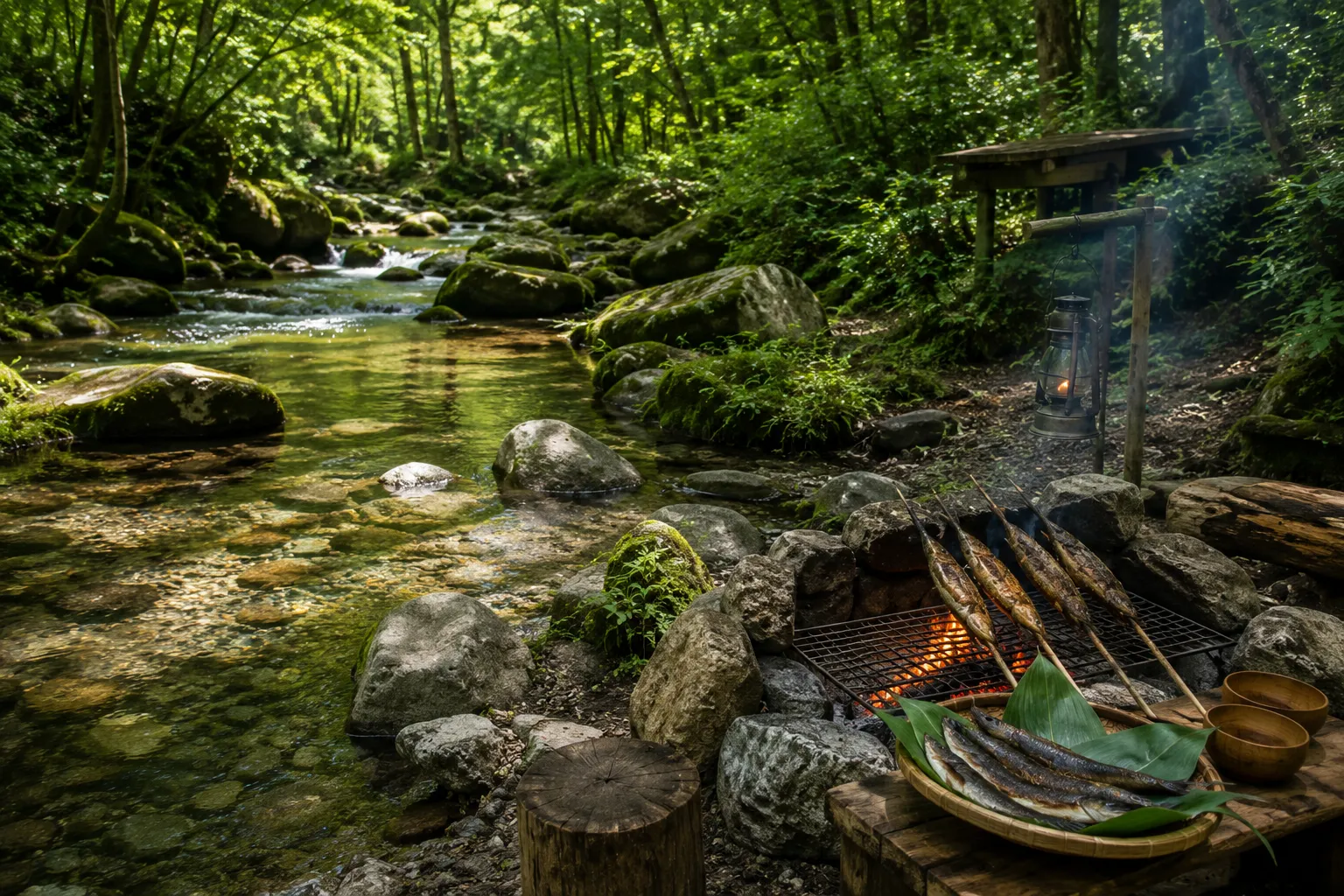
At certain outdoor resorts in the Yatsugatake (八ヶ岳) area of Yamanashi, you can participate in a traditional Japanese activity called sakana no tsukamidori — literally "fish grabbing." You wade into a shallow stream, catch trout with your bare hands, then learn to clean and cook it yourself over an open fire.
A guest from Taiwan described it perfectly after doing it with her family: "We never do this at home. We buy fish from a supermarket, already cut. Here, we learned where food actually comes from. My kids understood something important today."
That's not a tourism experience. That's food education (shokuiku, 食育) — something Japanese schools take seriously, and something you can experience as a visitor.
Why it works for travelers: It's hands-on, photogenic, and completely unlike anything available back home. Kids love it. Couples love it. And the fish you cook and eat at the end tastes incredible.
Where to find it: Outdoor activity resorts in the Yamanashi / Yatsugatake area, particularly around the Kiyosato highlands.
2. Sleep in a Dome Tent with a View of Mount Fuji
Glamping in Japan has reached a remarkable level of quality — but nothing beats waking up inside a transparent dome tent with Mount Fuji filling the window.
Several resorts in the Yamanashi / Fujikawaguchiko area offer dome-style accommodation with floor-to-ceiling panoramic views of the mountain. You get a real bed, heating, and often in-tent dining — with that view.
Best time: October to February, when Fuji is capped with snow and the air is clearest.
3. Forest Bathing (Shinrin-yoku) — the Japanese Practice of Healing in Nature
Japan invented shinrin-yoku — "forest bathing" — in the 1980s as a recognized form of stress reduction. It's not hiking. It's slow, deliberate time in the forest: noticing smells, sounds, the texture of bark.
Many glamping resorts offer guided shinrin-yoku walks with certified guides. The Boso Peninsula in Chiba and the forests around Nikko are especially well-regarded for this.
Why it resonates: In a world of screens and schedules, 90 minutes of silent forest time feels almost radical. Guests consistently report it as "unexpectedly emotional."
4. SUP (Stand-Up Paddleboarding) on a Glassy Mountain Lake
Japan's inland lakes — particularly in the Fuji Five Lakes region (Yamanashi) and around Nikko (Tochigi) — are often completely flat in the early morning. Stand-up paddleboarding here feels like floating on a mirror, with mountains reflected beneath you.
Many resorts include SUP sessions in their activity packages, or you can book through local operators.
Best time: May–October, early morning for the best conditions.
5. Traditional Japanese BBQ Under the Stars
Japanese BBQ (yakiniku style) is a different experience from Western-style grilling. You're seated around a personal charcoal grill, cooking small pieces of premium wagyu beef, fresh seafood, and seasonal vegetables in your own time.
At glamping resorts, this happens outdoors — at your private fire pit, under a canopy of stars, with no crowds and no menu rush. It's one of those meals where time slows down.
What to order: Wagyu beef sets, fresh oysters (if in season), and local vegetables. Many resorts source directly from nearby farms.
6. Archery in a Forest Clearing
Traditional Japanese archery (kyudo) is a meditative practice — but many outdoor resorts offer a more accessible Western-style archery experience that's immediately satisfying. Standing in a forest clearing, pulling back a bow, hitting a target 20 meters away. It's simple and completely absorbing.
No experience required. Most sessions run 30–60 minutes with a guide.
7. Kayaking Through Sea Caves Along the Coastline
The Boso Peninsula in Chiba and the Izu Peninsula in Shizuoka both have rugged coastlines with sea caves accessible only by water. Guided kayaking tours take you through rock formations, into caves, and along cliffs you'd never see from land.
The guides are usually excellent English speakers, and the experience is suitable for beginners.
Best time: April–October.
How to Book These Experiences
Most of these activities can be booked in advance through GetYourGuide — English-language booking, international payments, and free cancellation on most tours.
For the fish-catching experience and dome glamping, booking 2–4 weeks in advance is recommended, especially on weekends.
Ready to explore Japan's outdoors?
Book your stay and your activities with English-language support, international payments, and flexible cancellation.