Day Trips
Glamping Near Tokyo: Every Area Ranked by Travel Time
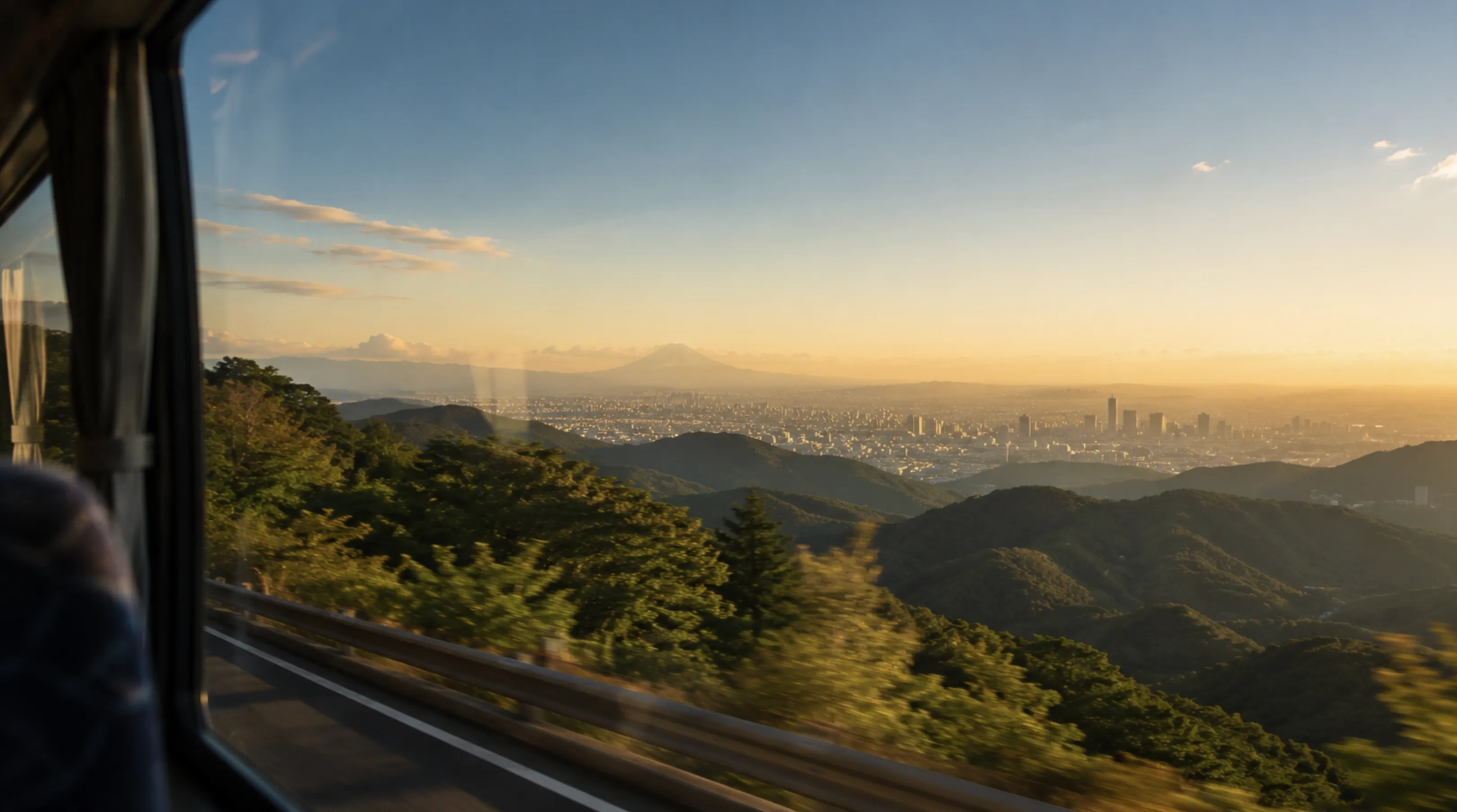
This article contains affiliate links. If you book through them, I may earn a small commission at no extra cost to you. Learn more
The single most common question I get from international guests is some version of: "How far is this from Tokyo?"
The honest answer is that it depends enormously on where you go — and most guides bury this in vague phrases like "easily accessible." So here's the version I'd actually give a friend: every glamping area within reach of Tokyo, ranked by real door-to-door travel time, with what you get for each extra half hour.
I work at a glamping resort in Japan, so these are the routes I explain to guests every week.
The Quick Answer
| Area | From Shinjuku/Tokyo Stn | Car-free? | What you get |
|---|---|---|---|
| Chiba (northern Boso) | 60–90 min | Moderate | Fastest escape, forest & coast |
| Kanagawa / Hakone edge | 90 min | Easy | Onsen towns nearby |
| Lake Kawaguchiko | 105–120 min | Easy | Mount Fuji views |
| Lake Yamanakako | 120 min | Easy | Fuji views, cooler summers |
| Ibaraki | 90–120 min | Hard | Best value, fewest crowds |
| Chiba (southern Boso) | 120–150 min | Moderate | Best beaches, quietest |
| Gotemba / Shizuoka | 120–150 min | Moderate | Fuji from the south |
If you want the short version: for the fastest trip, go to northern Chiba. For the best trip, go to Lake Kawaguchiko. Both are doable as an overnight from Tokyo without a car.
Under 90 Minutes: Chiba (Northern Boso Peninsula)
This is the closest real glamping to central Tokyo. Cross Tokyo Bay via the Aqua-Line and you're in forest and farmland within an hour.
Getting there: 60–90 minutes by car. By train, JR lines from Tokyo Station reach the area in 60–90 minutes, then a short taxi.
Why go: You leave the city after work on Friday and you're at a campfire by dinner. The landscape is gentle rather than dramatic — forests, rice fields, small fishing ports — and the climate is the mildest near Tokyo, which makes it the most reliable choice in shoulder seasons.
The trade-off: No mountain views. If a Fuji photo is the point of your trip, this isn't the one.
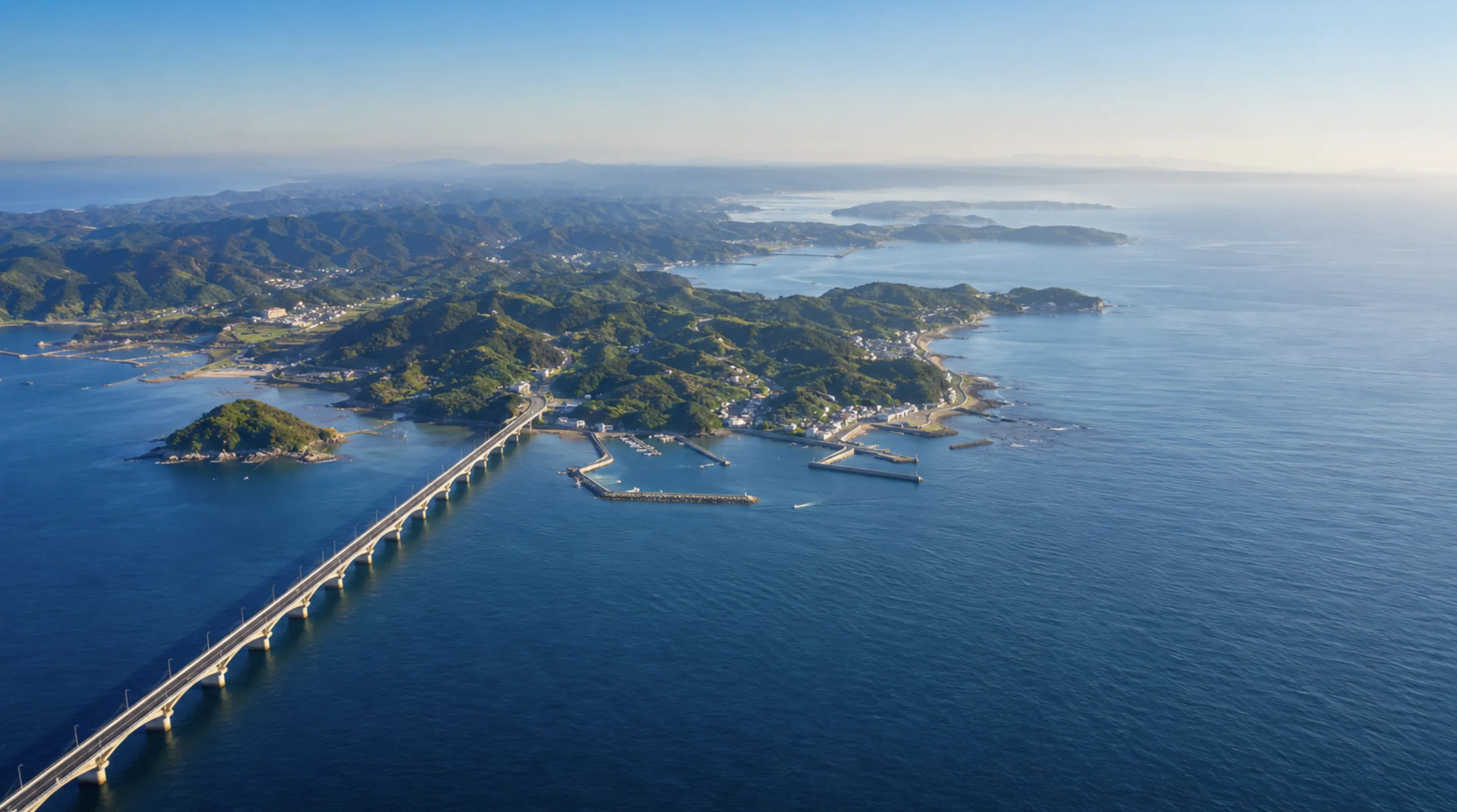
Best for: Short trips, families with young children, first-timers, winter stays when other areas get cold.
I've written a full guide to outdoor activities in Chiba if you want to fill the days.
About 2 Hours: Lake Kawaguchiko (The One I'd Recommend)
Two hours from Shinjuku by direct highway bus. This is the best balance of travel time, scenery, and infrastructure anywhere near Tokyo.
Getting there: The direct bus from Shinjuku Station takes about 1 hour 45 minutes and costs roughly ¥2,000–2,500 with no transfers. By car, 90–120 minutes. Many resorts run a free shuttle from Kawaguchiko Station if you reserve it in advance.
Why go: Mount Fuji, framed in your tent window. Dome resorts here are built specifically to face the mountain, and the town has cafes, an onsen, lake cruises, and sightseeing buses — so you're never stuck if the weather turns.
The trade-off: It's the most popular area, so it's also the priciest and the first to sell out. Fuji also hides behind clouds often in summer.
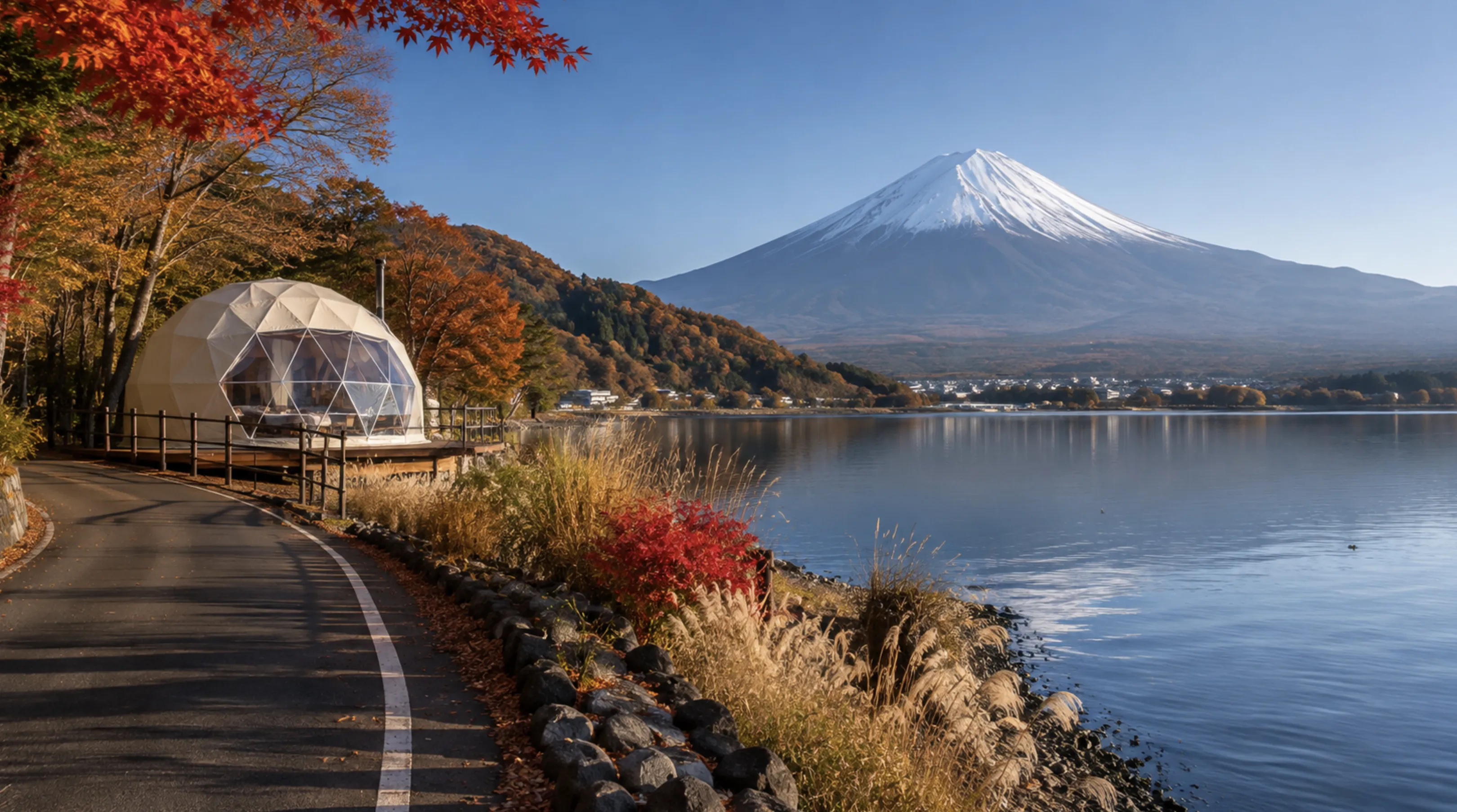
Best for: First-time visitors, couples, anyone traveling without a car, photographers.
Full details in my Mount Fuji glamping guide.
About 2 Hours: Lake Yamanakako
The largest of the Fuji Five Lakes, slightly higher in elevation and noticeably quieter than Kawaguchiko.
Getting there: Highway bus from Shinjuku, roughly 2 hours. Some services continue past Kawaguchiko; check which stop your resort is nearest.
Why go: Fuji views with fewer people, cooler summer nights, and better watersports — SUP and canoeing are genuinely good here. A newer generation of private-villa resorts with in-room onsen has opened around the lake.
The trade-off: Less to do in town than Kawaguchiko. That's a feature if you want quiet, a bug if you have restless teenagers.
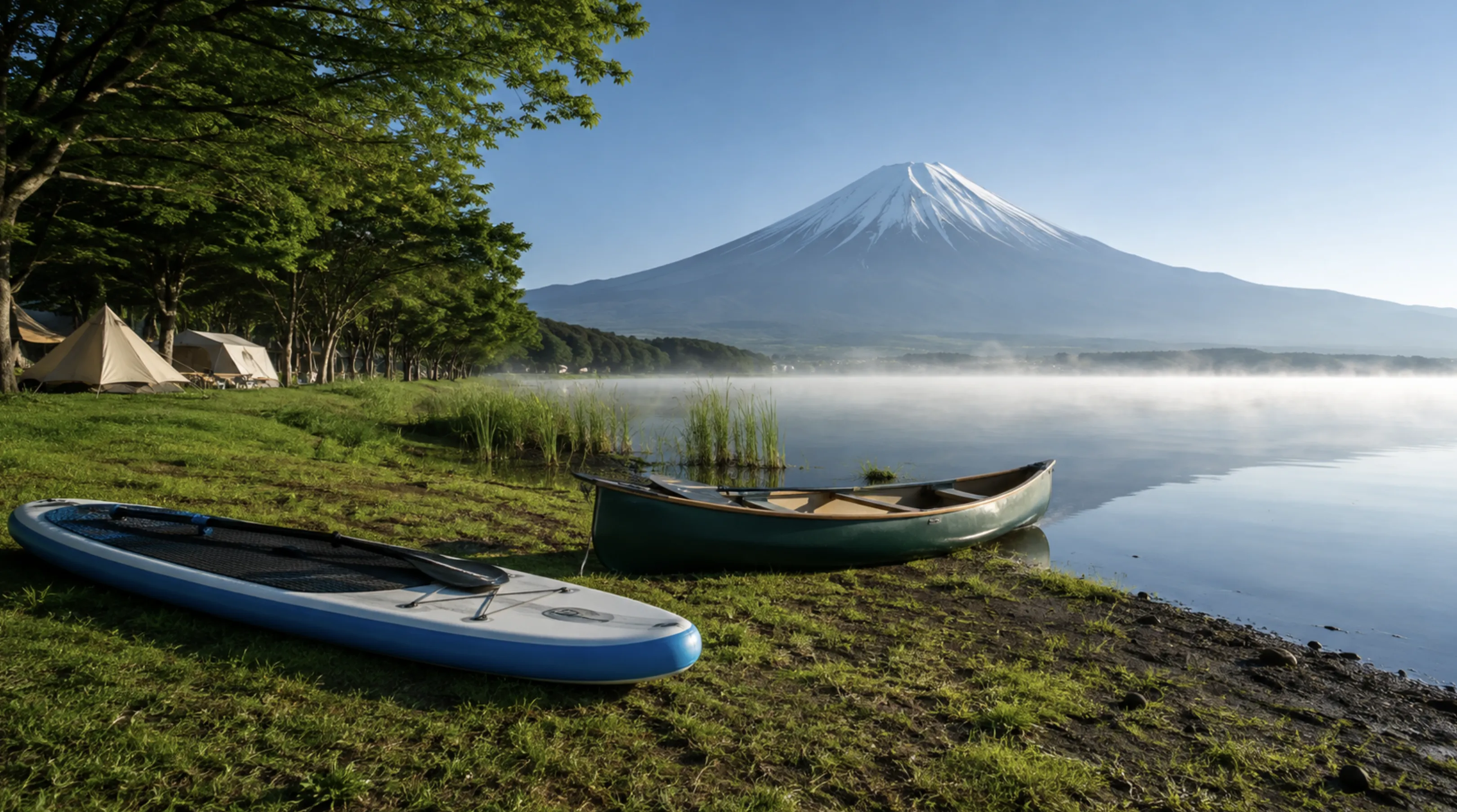
Best for: Summer trips, couples wanting privacy, repeat visitors.
90 Minutes to 2 Hours: Ibaraki (The Value Pick)
North-east of Tokyo, and almost entirely skipped by international travelers.
Getting there: 90–120 minutes by car. Public transport is the weak point — trains reach the main towns, but the last mile to rural resorts often has no bus service.
Why go: The same quality of tent, dinner, and setting as Chiba for 20–30% less. Weekends are actually available. If you're on a budget and have a car, this is the smartest choice near Tokyo.
The trade-off: You really do want a car here.
Best for: Budget-conscious travelers with a rental car, anyone who hates crowds.
2 to 2.5 Hours: Southern Chiba & Gotemba
Push past two hours and two things open up.
Southern Boso (Chiba): Proper beaches, warm ocean, and the quietest coastline near Tokyo. Worth the extra 45 minutes in summer.
Gotemba (Shizuoka): Mount Fuji from the southern side, plus Japan's largest premium outlet mall and easy onward travel to Hakone. Good if you're combining Fuji with a Hakone onsen stay.
Best for: Summer beach trips (southern Chiba), Hakone-combination itineraries (Gotemba).
Which Should You Choose?
Straight recommendations, no hedging:
Two Things That Change the Real Travel Time
1. Sunday afternoon traffic. Every route back into Tokyo slows down between roughly 2pm and 7pm on Sundays and holidays. A 90-minute drive can become 2.5 hours. Leave early, or leave late and have dinner on the way.
2. The last mile. "Two hours from Tokyo" usually means two hours to the nearest station — not to the resort gate. Most glamping sites sit another 10–25 minutes beyond that by shuttle or taxi. Always confirm this before booking; my car-free guide covers exactly how.
How to Book
For accommodation, Booking.com lists glamping resorts across all of these areas in English, with the nearest station shown on each listing — which is exactly what you need to judge the last mile. Search "glamping Kawaguchiko," "glamping Chiba," or "glamping Yamanakako" for live prices on your dates.
For activities, GetYourGuide covers day tours across the Fuji area and beyond, many with pickup from central Tokyo — useful if you'd rather not arrange transport yourself.
For what all of this costs, see my Japan glamping price guide.
The Bottom Line
Glamping near Tokyo isn't a compromise. Within two hours of Shinjuku you can be looking at Mount Fuji from a heated dome with a wagyu BBQ in front of you — and you can get there on a bus for the price of a couple of coffees.
Pick Kawaguchiko for your first trip. Everything else on this list is a reason to come back.
Ready to explore Japan's outdoors?
Book your stay and your activities with English-language support, international payments, and flexible cancellation.