Planning
What to Pack for Glamping in Japan (And What to Leave at Home)
This article contains affiliate links. If you book through them, I may earn a small commission at no extra cost to you. Learn more
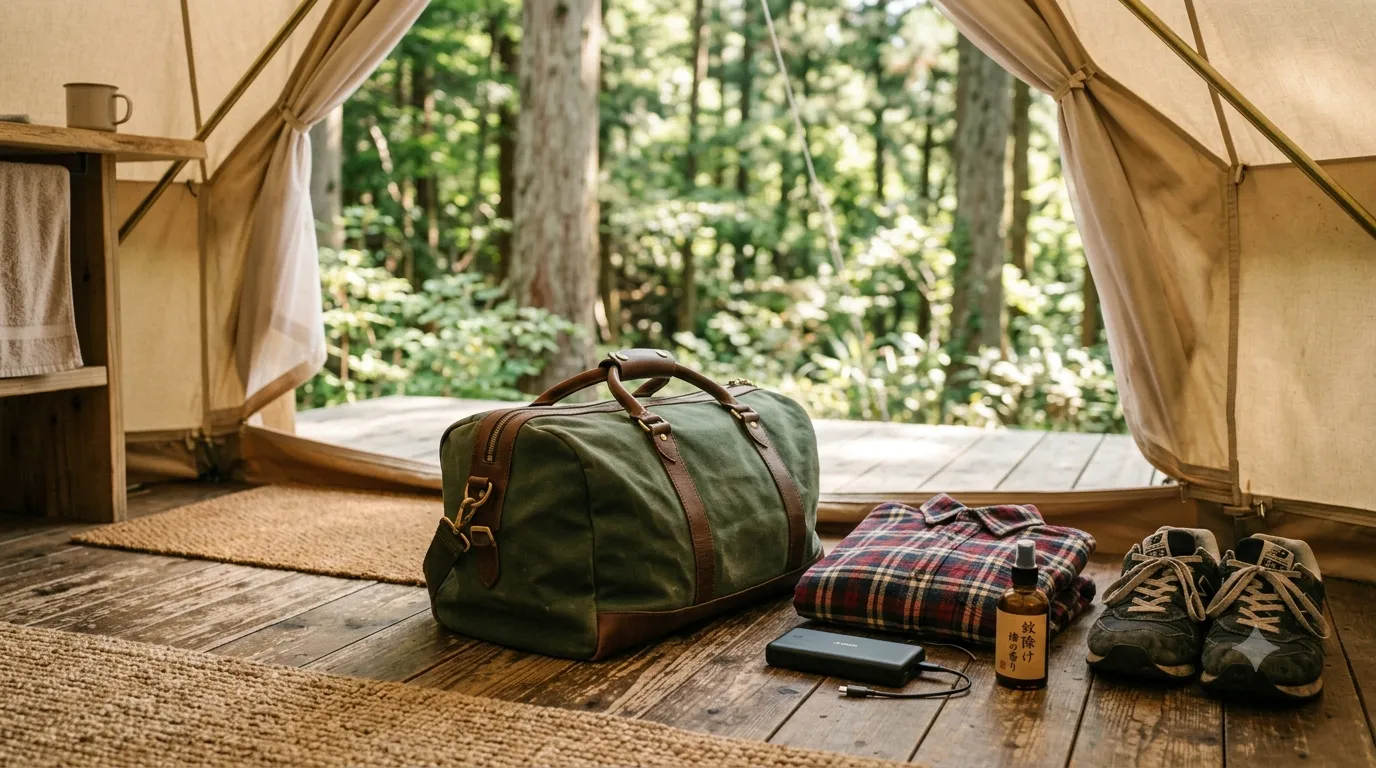
Here's the mistake I see most often: guests arrive with a car full of camping gear they never touch, and without the one small thing they actually needed.
Japanese glamping is not camping. The resort supplies almost everything — often including things Western travelers don't expect, like a yukata (cotton robe) waiting on the bed. But there are a handful of items that nobody provides, and a few that Japan will quietly demand of you.
I work at a glamping resort in Japan, so this list comes from watching hundreds of check-ins.
What's Almost Always Provided
Skip these. Your resort has them.
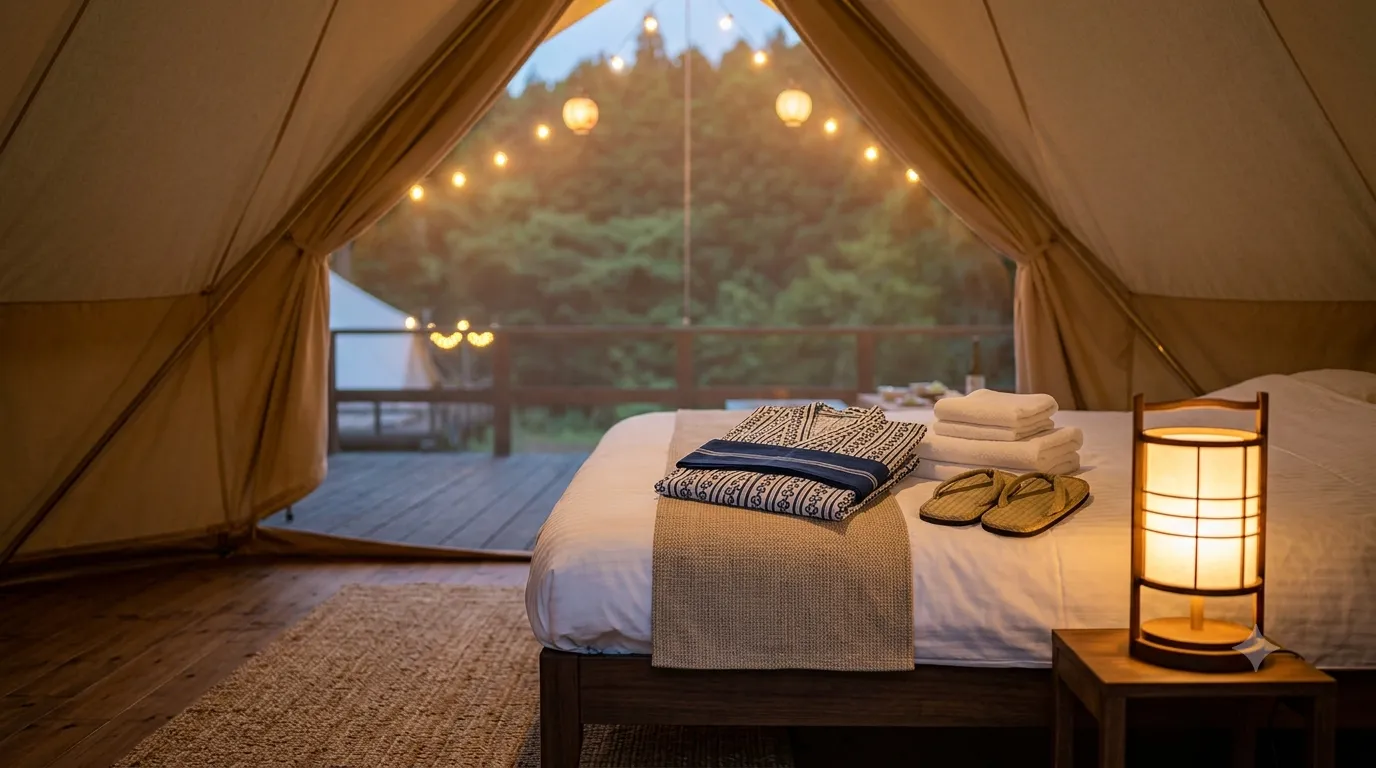
Some resorts also lend rain boots, blankets, and even outdoor jackets in winter. If you're unsure, ask when you book — it's a normal question and staff answer it constantly.
What You Actually Need to Bring
1. Insect repellent (April–October)
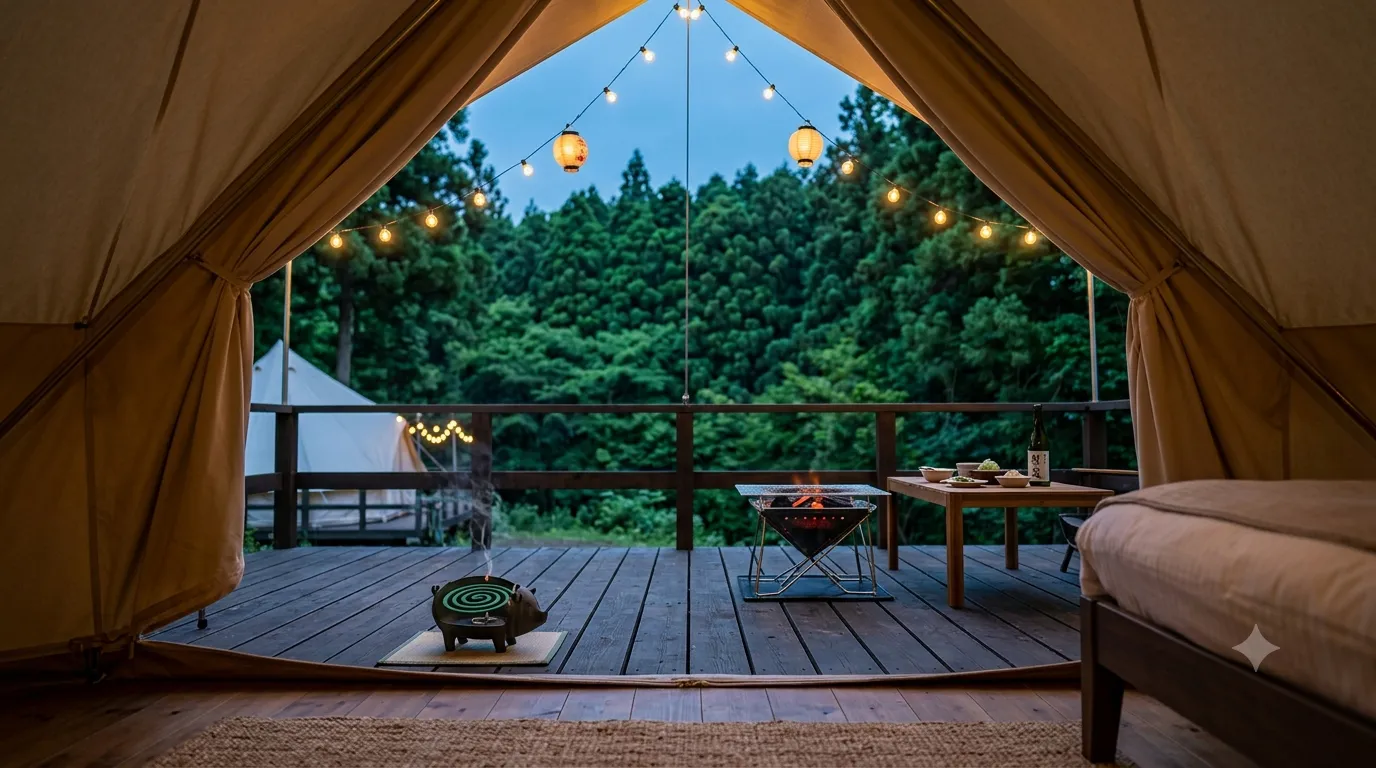
This is the number one thing guests wish they'd brought. Japanese summers in forested or lakeside areas mean mosquitoes at dusk, exactly when you're outside grilling.
Buy it in Japan — any drugstore has excellent options, and katori senko (mosquito coil) is the classic outdoor solution. Some resorts provide coils; almost none provide personal repellent spray.
2. Layers — more than you think
Mountain and highland areas near Mount Fuji sit at elevation, and evening temperatures drop far more sharply than in Tokyo. A summer day at 30°C can mean a 17°C night by the fire.
My rule: whatever you'd wear for a Tokyo evening, add one warm layer. In winter, add two and bring a hat.
3. Shoes you don't mind getting dirty
Sites are gravel, grass, and dirt. Every season. Sneakers are fine; white sneakers you love are not.
4. A power bank
Tents have outlets, but the fire pit, the lake, and the viewpoint don't. Between photos and navigation, phones drain fast.
5. Cash (a small amount)
Most resorts take cards, but rural taxis, small local shops, and vending machines on the way may not. ¥10,000–20,000 in cash removes all friction. Japanese convenience-store ATMs accept foreign cards.
6. Any specific medication or contact lens supplies
Rural areas may not have a pharmacy nearby, and Japanese drugstores don't stock foreign prescriptions. Bring what you need for the trip.
The Things Travelers Don't Think Of
Swimwear. If the resort has a sauna, pool, or private open-air bath, you may want it. Note that public onsen baths in Japan are traditionally entered nude and gender-separated — swimwear is for private baths and pools only.
A tote or small daypack. For carrying your things between the tent, the bathhouse, and the BBQ area. Somehow nobody packs one.
A book or cards. Nights are long, dark, and gloriously unstructured. There's no TV at many sites and that's the point.
Sunscreen. Japanese summer sun is stronger than most visitors expect, and lake reflection doubles it.
What to Leave at Home
Quick Season Reference
| Season | Add to your bag |
|---|---|
| Spring (Mar–May) | Light jacket, allergy medication if you're sensitive to cedar pollen |
| Summer (Jun–Aug) | Insect repellent, sunscreen, swimwear, quick-dry clothing |
| Autumn (Sep–Nov) | Warm mid-layer, light gloves for late autumn evenings |
| Winter (Dec–Feb) | Proper coat, hat, gloves, thermal base layer, warm socks |
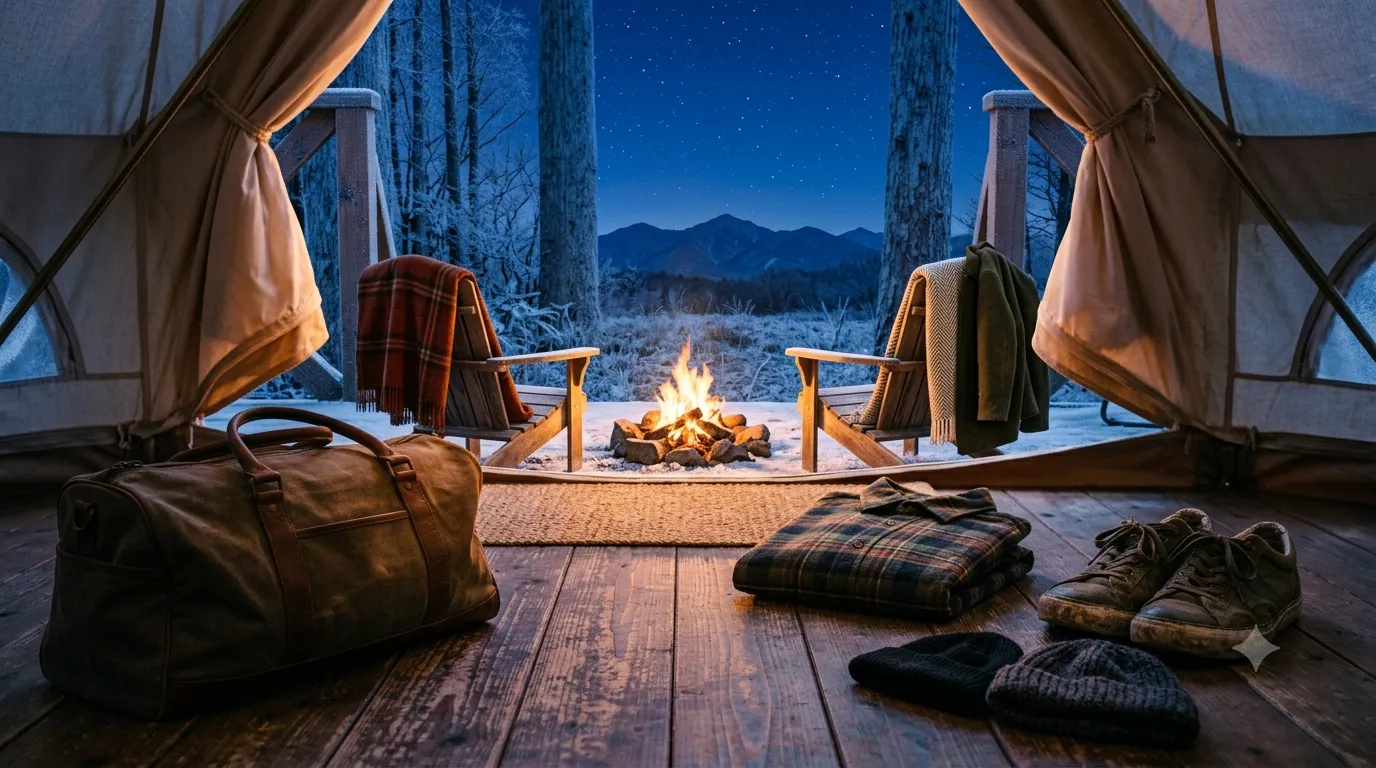
Winter deserves one extra note: the tents and cabins are heated and genuinely warm, but stargazing and the outdoor fire pit are the best parts of a winter stay. Dress for standing still outside at 0°C, not for the walk from the car.
For a fuller breakdown of when to go, see my season-by-season guide.
The One-Bag Test
If you're traveling car-free (see my guide to glamping without a car), here's the good news: everything above fits in a small overnight bag.
That's it. That's the whole trip. Send your big suitcase ahead to your next hotel with Japan's luggage delivery service and travel light.
Before You Go: Three Questions to Ask Your Resort
Send one short email after booking and you'll never be caught out:
That third question is the good one. Staff know exactly what guests wish they'd had last week, and they'll tell you.
Where to Book
For accommodation, Booking.com lists Japanese glamping resorts in English, and the amenity list on each property page tells you most of what's provided before you even ask. Search "glamping Kawaguchiko," "glamping Chiba," or the resort name directly.
For activities to fill your days, GetYourGuide covers Fuji-area tours and outdoor experiences with English booking and free cancellation on most bookings.
The Short Version
Bring insect repellent, one more warm layer than you think, shoes you don't mind ruining, a power bank, and some cash. Leave the camping gear at home.
The resort has thought about the rest. That's what you're paying for — and honestly, it's the whole reason glamping in Japan feels so good.
Ready to explore Japan's outdoors?
Book your stay and your activities with English-language support, international payments, and flexible cancellation.