Glamping
Glamping in Japan with Kids: An Honest Family Guide
This article contains affiliate links. If you book through them, I may earn a small commission at no extra cost to you. Learn more
Travelling Japan with children has a specific set of frustrations. Hotel rooms are small and often cap at three people. Restaurants can be stressful with a toddler. Museums and temples run out of appeal by day four. And everyone is tired.
Glamping fixes almost all of that in one night, which is why it has become so popular with Japanese families — and why I'd recommend it to any family visiting with kids.
I work at a glamping resort in Japan, and families are the guests I see most. Here's what actually works, broken down by the age of your children.
Why Glamping Works So Well for Families
Space. Your site is private. Children can be loud, run around, and be children without you apologising to anyone.
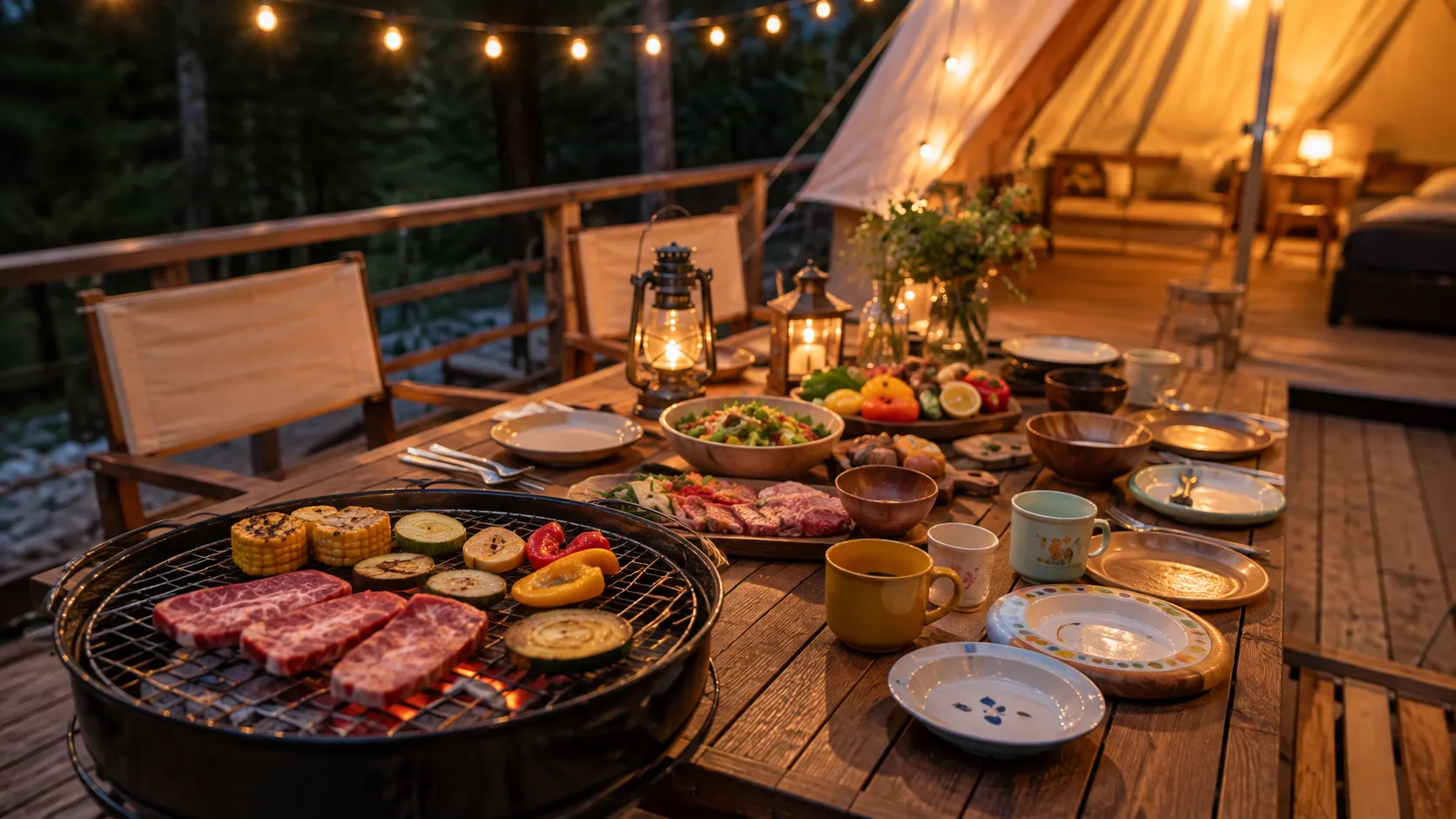
Dinner is solved. No restaurant, no menu negotiation, no waiting for a table with a hungry four-year-old. Food arrives at your site and everyone eats when they're ready.
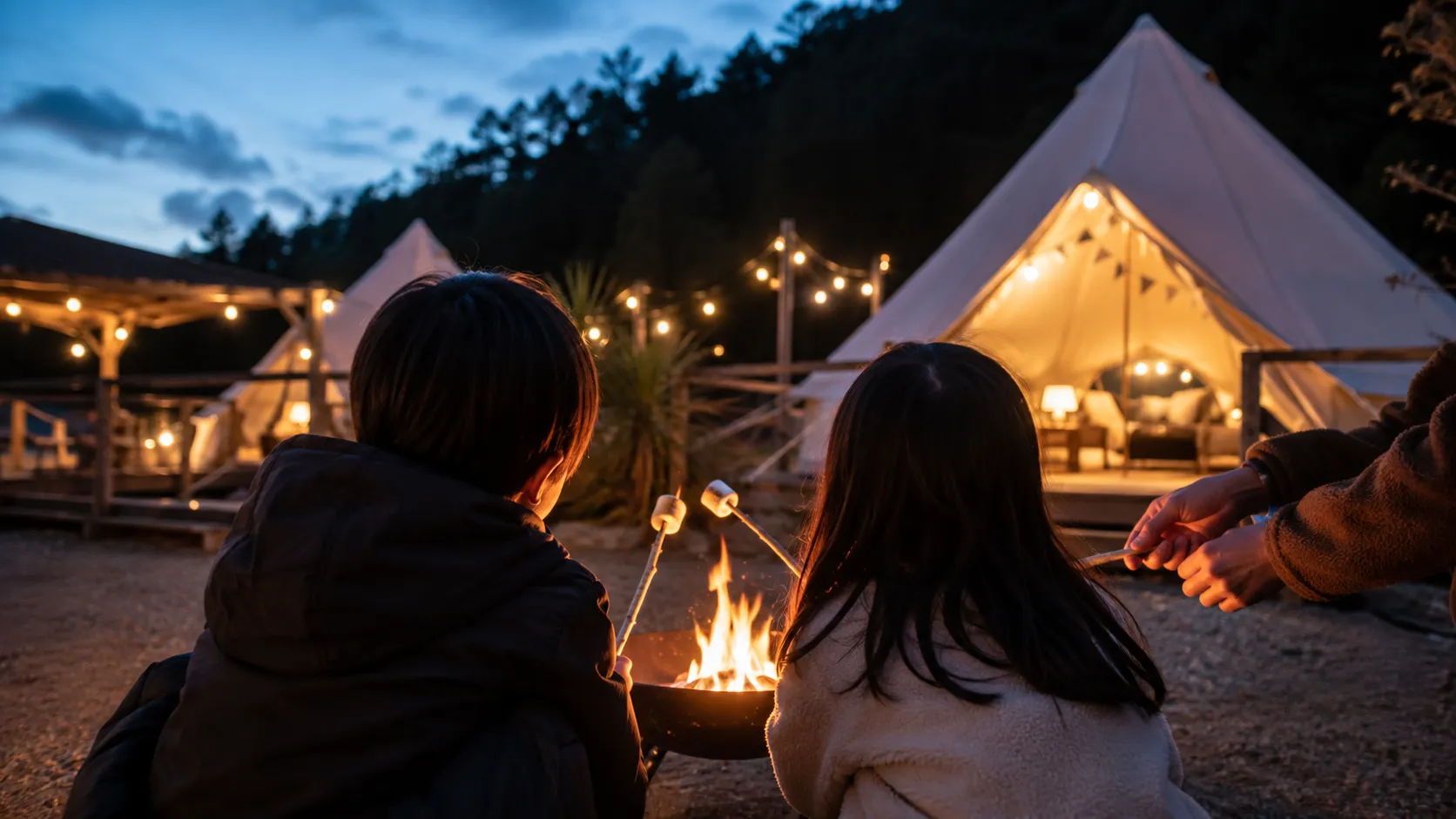
Built-in entertainment. Fire, marshmallows, insects, open space. Things that would bore an adult occupy a seven-year-old for hours, at zero cost.
Beds, not sleeping bags. Everyone sleeps properly, which shapes the entire next day.
No language barrier at dinner. This one is underrated. Ordering food in a rural Japanese restaurant with dietary constraints is genuinely hard. At a glamping resort, it's arranged in advance.
By Age: What to Expect
Babies and toddlers (0–3)
Honestly? This is the hardest age, but very doable.
What helps: You have a private, enclosed-ish space with a real bed, a fridge for milk and food, air conditioning or heating, and no neighbours through a wall. Compared to a small hotel room, it's more relaxed.
What to check before booking:
The fire pit is the main thing to manage. It's at ground level and genuinely hot. Most families with toddlers do the fire after the child is asleep, or skip it.
Ages 4–8: The Sweet Spot
This is the age glamping is perfect for.
Old enough to enjoy everything, young enough to find a marshmallow on a stick genuinely thrilling. This age group does not need a planned itinerary — the resort itself is the activity.
What they'll love:
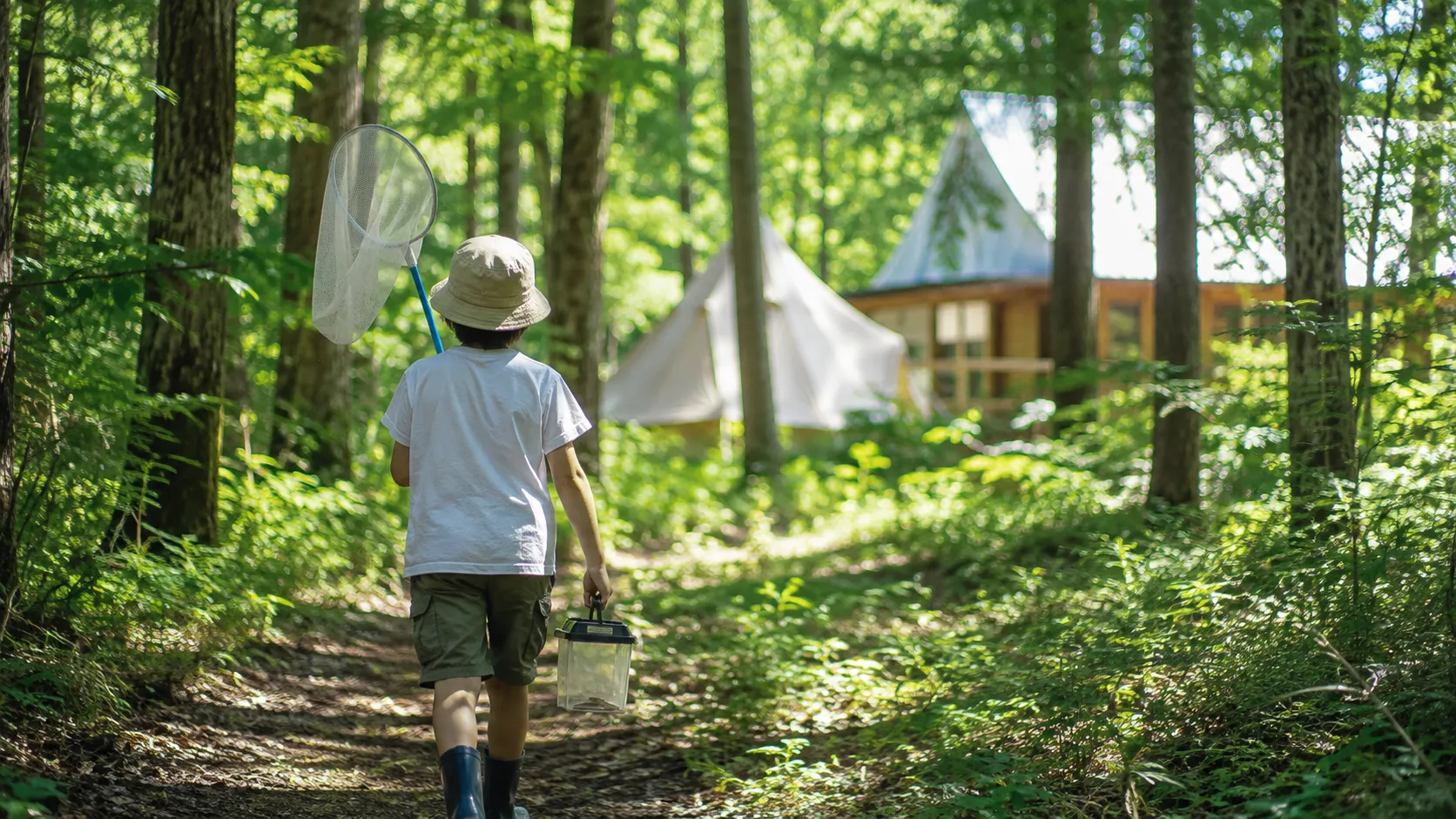
Practical tip: Bring a small torch each. Children with their own torch will entertain themselves for an hour after dark, and it makes the toilet trip at night much less dramatic.
Ages 9–13
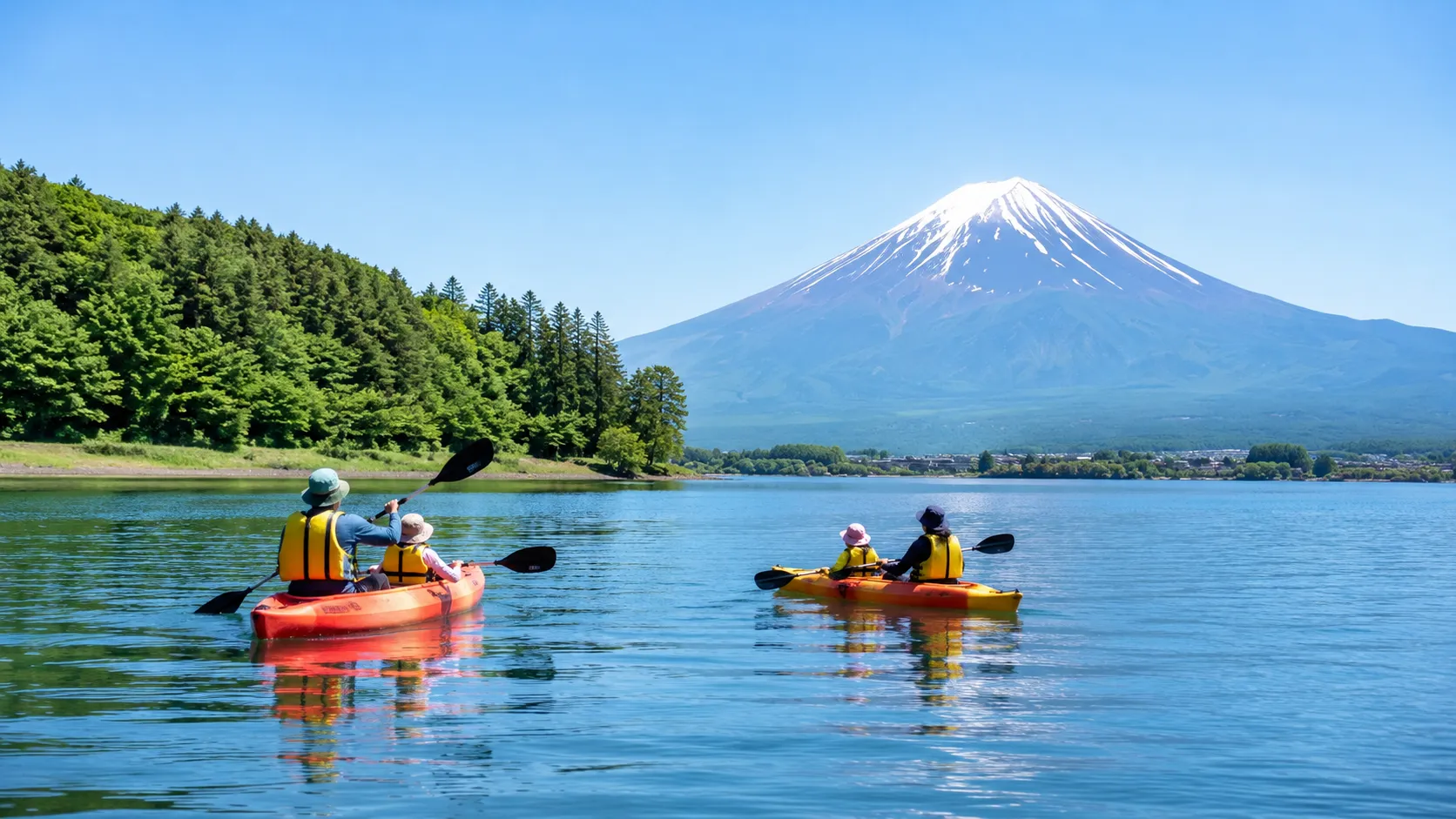
Still enthusiastic, and now capable of real activities: kayaking, SUP, archery, fishing, and cycling are all realistic at this age. This is when an activity-heavy resort earns its price — see my comparison of six resorts for which ones run full programmes.
Give them a job at dinner. Managing the grill is a rite of passage and buys you twenty minutes of peace.
Teenagers
The honest answer: it depends on the teenager, and the wifi.
What works: Resorts with real activities — paragliding near Fuji, watersports on Lake Yamanakako, a Fuji-Q Highland day trip nearby. A one-night stay slotted between city days, rather than a three-night nature retreat.
What to check: Wifi and mobile signal. Rural coverage is patchy, and while a digital detox sounds lovely in theory, day two can be tense. Some resorts have good wifi at the central lodge only.
Where to Go with Children
| Area | Why it suits families | Watch out for |
|---|---|---|
| Chiba (Boso) | Closest to Tokyo, mildest weather, beaches | Fewer mountain views |
| Lake Yamanakako | Cool summers, safe lake activities | 2 hours from Tokyo |
| Fujiyoshida (PICA area) | Activity-heavy, Fuji-Q Highland nearby | Busy in peak season |
| Ibaraki | Cheapest, quietest, most space | Really needs a car |
If it's your first family glamping trip in Japan, go to Chiba. The short drive matters more than you think when a child announces they feel sick, and the mild climate makes any season workable. Full details in my Chiba activities guide.
What It Costs for a Family
Most Japanese glamping resorts price per person, with reduced child rates — often around 50–70% of the adult rate for younger children, and infants sometimes free.
A realistic mid-range figure for two adults and two primary-school children, one night including dinner and breakfast: ¥70,000–¥110,000 ($465–$730).
That sounds like a lot until you compare it to a family hotel room plus two restaurant meals plus a paid activity in Tokyo — at which point it's competitive, and considerably more memorable. My full cost guide breaks down the numbers.
Two ways families save real money:
Six Things I'd Tell Any Family Before They Arrive
1. Book dietary requirements at reservation, not on arrival.
Allergies, vegetarian meals, and child portions are almost always possible with notice — and rarely on the day. This matters more with children than anyone.
2. Arrive at check-in time, not after.
Children need the daylight hours to explore and burn energy before dinner. Arriving at 6pm means a rushed, overtired evening.
3. Bring insect repellent April to October.
Children get bitten more and mind it more. Any Japanese drugstore sells excellent options. See my packing guide for the full list.
4. Pack one warm layer more than you think.
Highland areas near Mount Fuji drop sharply at night, even in summer. A cold child at a campfire ends the evening early.
5. Plan for one night, not three.
For most families, a single glamping night as a break in a city-heavy itinerary is perfect. Two nights work if the resort has a full activity programme. Three is usually one too many.
6. Ask about quiet hours.
Most Japanese resorts enforce quiet from around 10pm, properly. Worth knowing so you can time the wind-down rather than be surprised by it.
What Surprises Foreign Families Most
How safe it feels. Japanese resorts are meticulously maintained, staff are attentive, and the general environment is one where children roaming a little is normal and fine.
How structured the food is. You're not improvising camp cooking. Ingredients arrive prepped and portioned, the charcoal is already lit, and nobody has to plan a menu.
How well everyone sleeps. Fresh air, real beds, and a day spent outdoors. Parents routinely tell me it's the best night's sleep their children got in Japan.
How little they needed. The most common comment at check-out is some version of "we didn't need any of the stuff we brought." Which is rather the point — my full breakdown of what happens on the day covers exactly what's provided.
How to Book a Family Glamping Trip
For accommodation, Booking.com lets you filter by family-friendly properties and set the number of children, so the prices you see already include child rates. Search "glamping Chiba," "glamping Kawaguchiko," or "glamping Yamanakako," and check each listing for what's included.
For activities to build the trip around — Fuji day trips, lake sports, cultural workshops — GetYourGuide shows age suitability on most listings, with English booking and free cancellation on most bookings.
The Bottom Line
Of all the ways to spend a night in Japan with children, this is the one I'd choose. It removes the friction that makes family travel tiring — cramped rooms, restaurant logistics, entertainment planning — and replaces it with a fire, some space, and a proper bed.
Book one night in Chiba, midweek, with a resort that runs activities. If it goes as it usually does, it'll be the day your children talk about when they get home.
Ready to explore Japan's outdoors?
Book your stay and your activities with English-language support, international payments, and flexible cancellation.