Planning
This article contains affiliate links. If you book through them, I may earn a small commission at no extra cost to you. Learn more
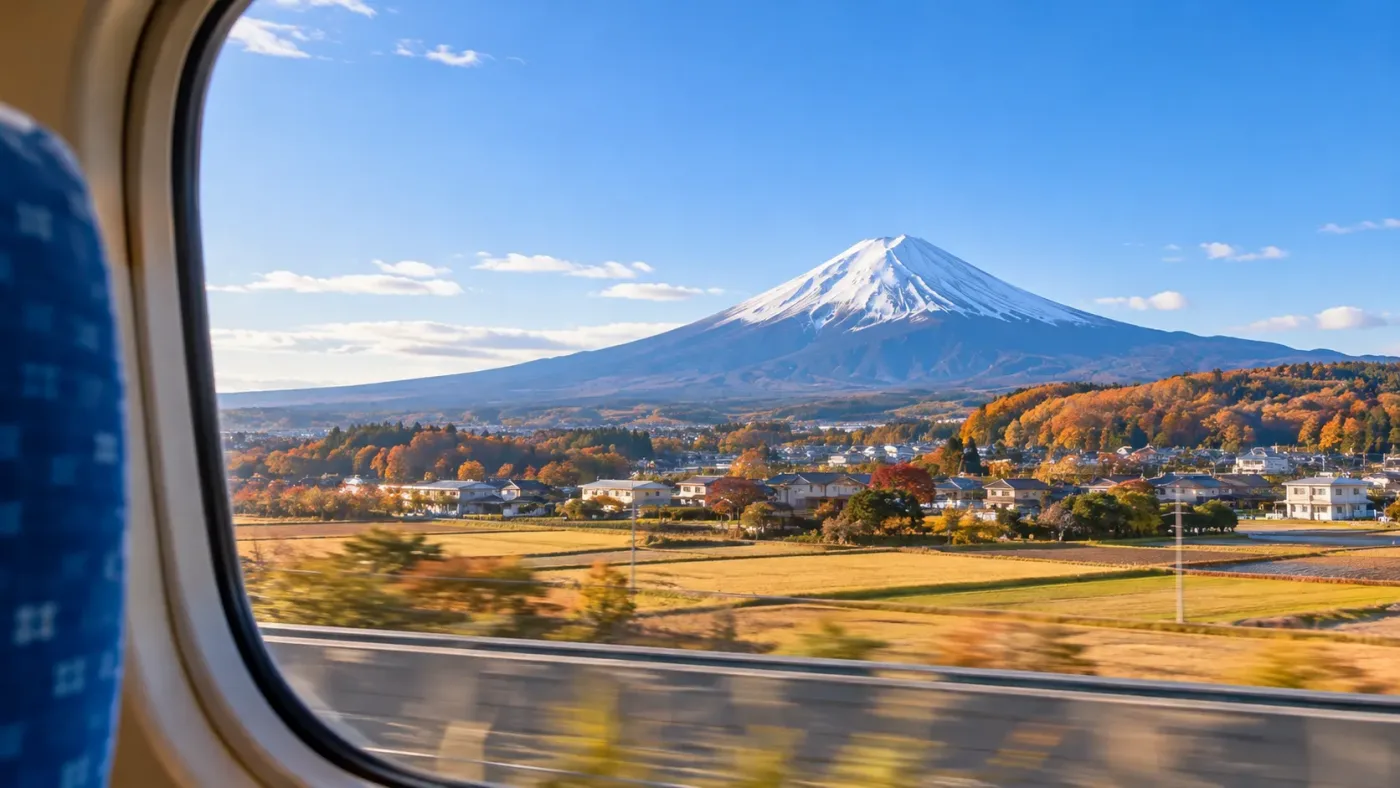
Almost nobody comes to Japan specifically to go glamping. You come for Tokyo, Kyoto, the food, the temples — and somewhere in the planning you think it would be nice to see Mount Fuji properly, and sleep somewhere that isn't a hotel room.
The question isn't whether glamping is worth doing. It's where it fits without wrecking the rest of your trip.
I work at a glamping resort in Japan, and the guests who get this right all did the same thing: they treated it as one deliberate night in the middle of a city-heavy trip, not as a destination in itself.
Put it on day 3 or 4, right after Tokyo, before you head west to Kyoto.
That timing works for three reasons:
One night. Two if the resort has real activities. Three is almost always one too many on a first trip.
If this is your first time glamping in Japan at all, the complete first-timer's guide walks through what you're actually booking before you slot it into the route.
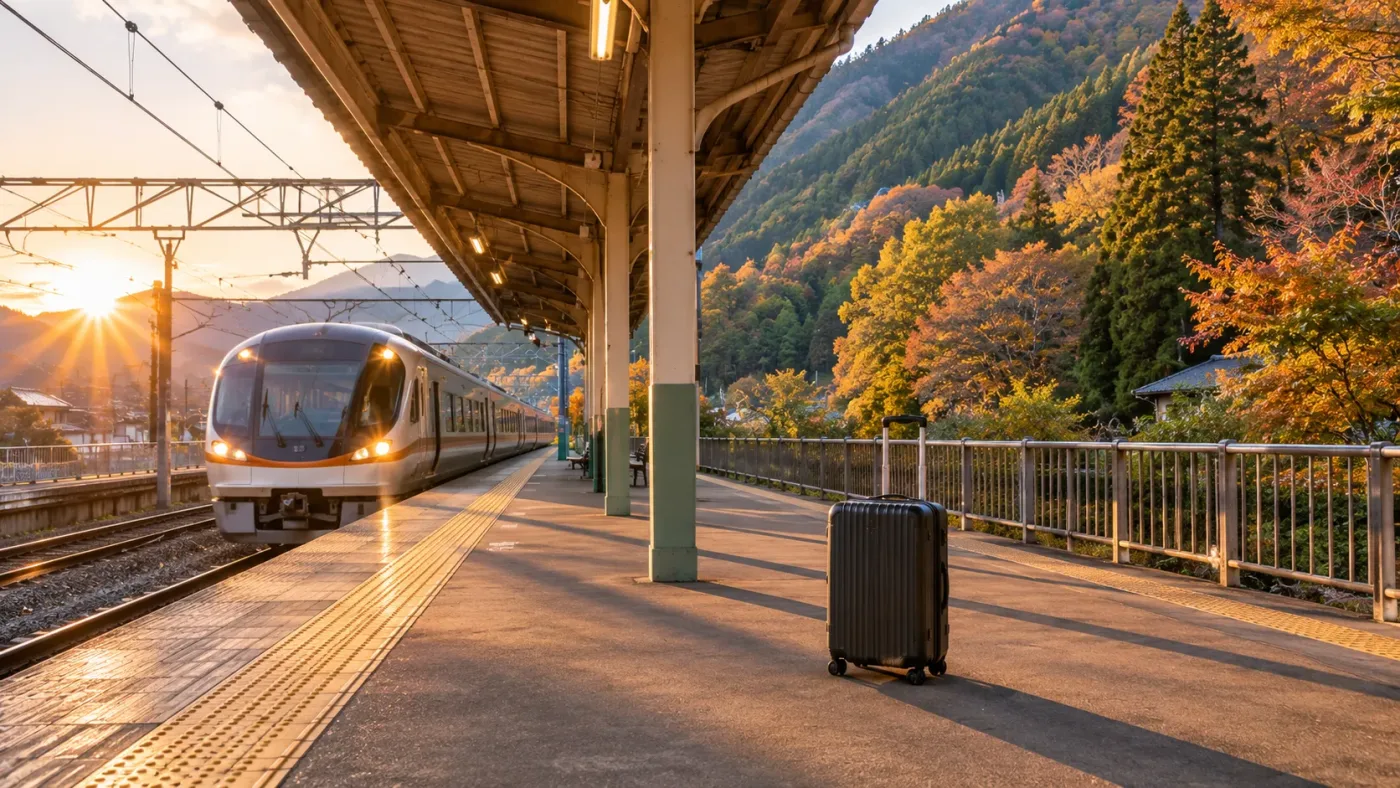
The classic first-timer route. It's tight, but one night still fits.
| Day | Where |
|---|---|
| 1–3 | Tokyo |
| 4 | Glamping near Mount Fuji or in Chiba |
| 5–6 | Kyoto |
| 7 | Osaka, or fly out |
Honest caveat: on a 7-day trip, this costs you roughly half a day of sightseeing in transit. If it's your first visit and you want to see as much as possible, you may prefer to skip it and save glamping for a second trip. If you'd rather have one memorable night than one more temple, take it.
Best pick at this length: Lake Kawaguchiko. It's on the way west and reachable by direct bus.
This is where glamping stops being a trade-off and becomes an obvious inclusion. Most 10-day itineraries already recommend a night near Hakone or Mount Fuji — glamping is simply a better version of that night.
| Day | Where |
|---|---|
| 1–4 | Tokyo |
| 5 | Glamping, Fuji Five Lakes |
| 6 | Continue to Kyoto |
| 7–8 | Kyoto |
| 9 | Nara or Osaka day trip |
| 10 | Osaka, fly out |
You lose nothing from the city days and gain the one night people actually talk about afterwards.
With two weeks you have room to do it properly.
Option A — two nights in one place. Stay by Mount Fuji and actually use the resort: kayaking, the sauna, two chances at a clear mountain morning. Fuji hides behind cloud often, so a second morning roughly doubles your odds.
Option B — two separate stops. One night near Fuji on the way west, and one in Chiba at the end of the trip before flying out of Narita. Chiba is 60–90 minutes from Tokyo and close to the airport, which makes it a gentle last night.
Putting glamping at the very start.
It's tempting — arrive, escape the city immediately, recover from the flight in nature. In practice it goes badly:
Give yourself two or three days in Tokyo first. Adjust, buy what you forgot, get used to how Japan works. Then go.
This is the practical question nobody answers clearly, so here it is.
The nationwide Japan Rail Pass does not cover the Fujikyu line — the private railway that runs the final stretch from Otsuki to Kawaguchiko. The JR Pass gets you to Otsuki; the last leg costs roughly ¥1,770 extra per adult each way (base fare plus express surcharge). It's not much, but it surprises people at the gate.
The highway bus avoids this entirely. Shinjuku to Kawaguchiko direct, about 1 hour 45 minutes, roughly ¥2,000–2,500, no transfers and no pass involved. For most travellers this is simpler and cheaper than the train, pass or no pass.
If you're spending most of your time around Tokyo, price the JR Tokyo Wide Pass instead — unlike the nationwide pass, it does cover the Fujikyu line.
Bottom line: don't buy a nationwide rail pass because of the glamping leg. Decide on the pass based on your Tokyo–Kyoto–Osaka travel, then book the Fuji leg separately on the bus.
You can compare and book the Shinjuku–Kawaguchiko services in English through 12Go, which lists Fuji Kyuko and the other operators side by side and takes international cards. The code 12GOJP gives 10% off Japan routes (up to USD 4, new users).
For the onward leg to Kyoto, it's worth pricing the options before committing to a pass. The Shinkansen is fastest at around 2 hours 15 minutes; overnight and daytime buses cost a fraction of that and take 8–9 hours. You can compare Tokyo–Kyoto routes and fares here to see what the journey actually costs on your dates — then decide whether a rail pass earns its price.
You're travelling with suitcases. The resort is in a forest. These facts conflict.
The solution is Japan's luggage forwarding service (takkyubin). Send your large suitcase from your Tokyo hotel directly to your Kyoto hotel, skipping the glamping night entirely. It typically costs ¥2,000–3,000 per bag and arrives the next day. You travel to the resort with an overnight bag.
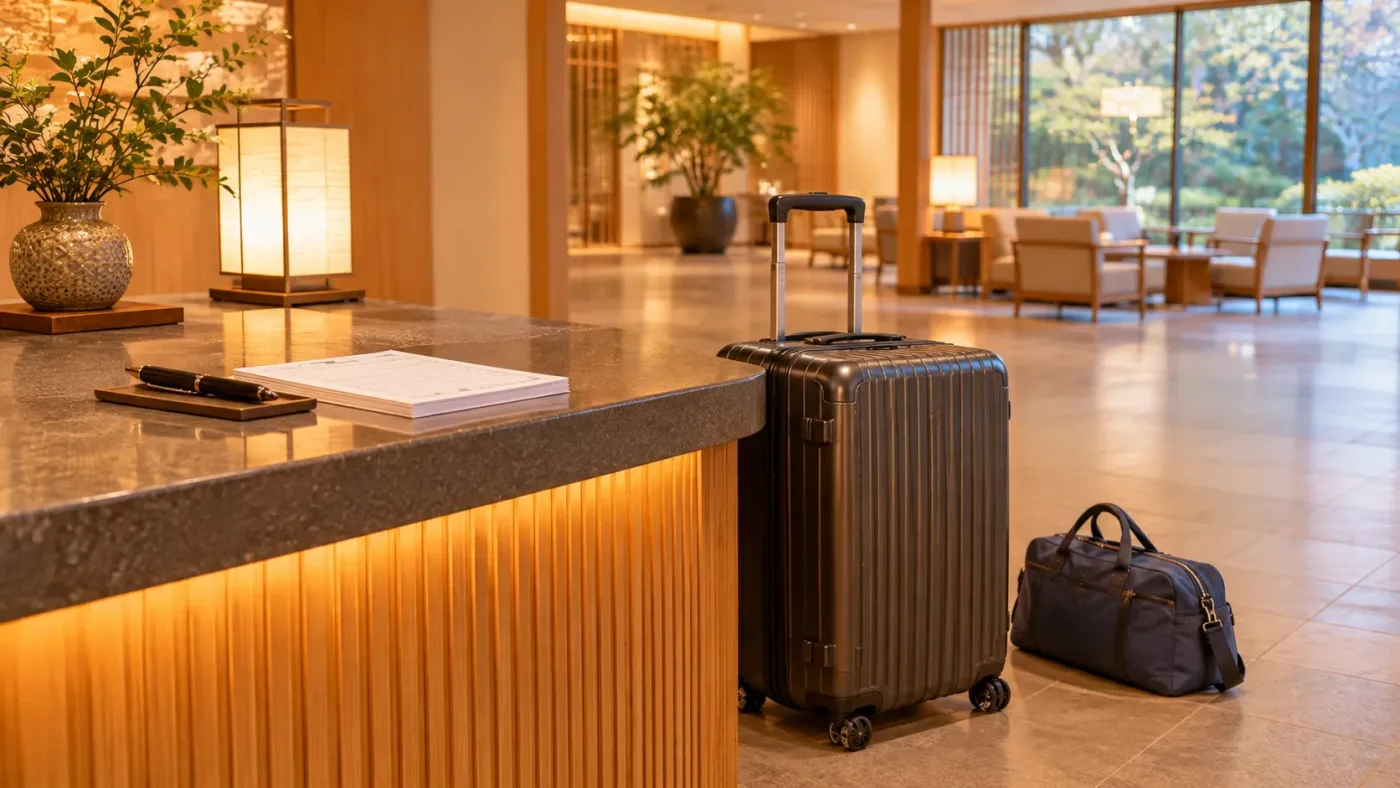
Almost every hotel front desk arranges this, and it is the single thing that makes a mid-itinerary glamping night painless. My packing guide covers what to put in the small bag.
Your priority is different from someone building a whole trip around glamping. You want minimal friction:
| If your route is… | Choose | Why |
|---|---|---|
| Tokyo → Kyoto | Lake Kawaguchiko | On the way west, direct bus, Fuji views |
| Tokyo → Tokyo (day trip style) | Chiba | 60–90 min, easiest in and out |
| Including Hakone | Gotemba, Shizuoka side | Fuji from the south, fits a Hakone leg |
| Ending at Narita | Chiba | Close to the airport for a final night |
Full comparisons in my six-resort breakdown, and travel times for every area in my guide to glamping near Tokyo.
What the day actually looks like, so you can judge the cost in time:
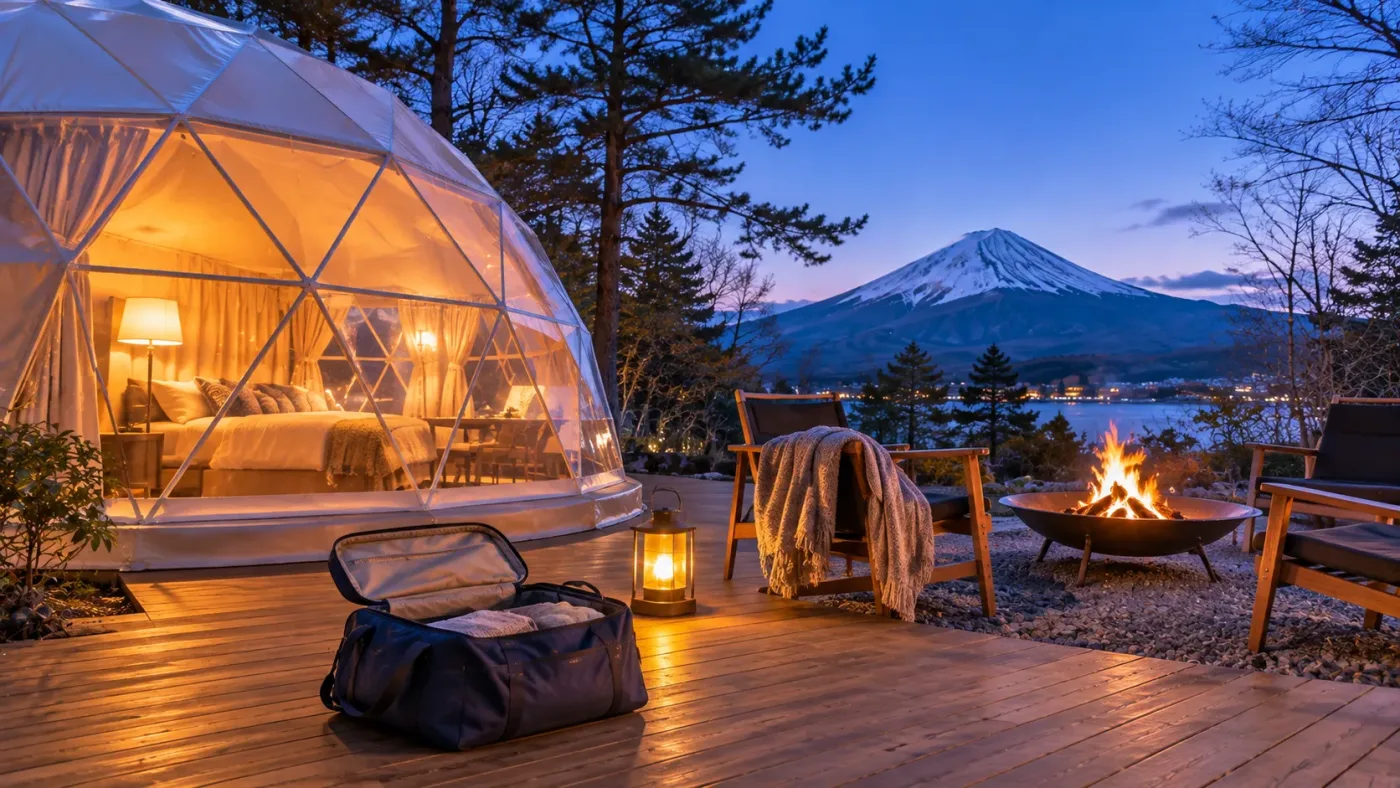
You lose about half a day of sightseeing. That's the honest price. Most people decide afterwards it was the best-spent half day of the trip.
Staying in Kansai and not keen on the Fuji detour? Lake Biwa is under an hour from Kyoto Station and costs you half a day instead of two.
For a mid-itinerary stop, yes. Two if you specifically want Mount Fuji — the mountain is often hidden, and a second morning doubles your chances.
Before. Fuji sits between Tokyo and Kyoto, so it's on the way rather than a detour. Going after means backtracking.
You can visit the Fuji Five Lakes as a day trip, but you'd miss the entire point — the evening fire, the stars, and the clear morning view. If you only have a day, do a Fuji day tour from Tokyo instead and save glamping for a trip where you have the night.
Yes, and winter has the clearest Fuji views of the year plus the lowest prices. The tents are heated. See my winter glamping guide.
It often works better than another hotel night — private space, dinner handled, activities on site. My family guide covers what works at each age.
Earlier than the rest of your trip. Resorts are smaller than hotels and sell out, especially autumn weekends and holidays. Two to three months for peak dates.
For accommodation, Booking.com lists Japanese glamping resorts in English with flexible cancellation on most properties — useful when your dates might shift as the rest of the itinerary firms up. Search "glamping Kawaguchiko" or "glamping Chiba."
For the transport legs, 12Go covers Japanese rail, buses and ferries in one English-language booking, which saves juggling operator sites mid-trip. The two journeys this itinerary turns on:
The code 12GOJP gives 10% off Japan routes (up to USD 4, new users).
For activities on the day, GetYourGuide runs Fuji-area tours, several with pickup from central Tokyo.
Don't build your Japan trip around glamping. Build it around the cities you came for, then drop one night into the gap between Tokyo and Kyoto — day 4 of seven, day 5 of ten.
Send your suitcase ahead, take the bus, and book the resort before you book anything else. It costs you half a day of sightseeing and returns the night you'll describe first when people ask about the trip.
Book your stay and your activities with English-language support, international payments, and flexible cancellation.