Glamping
Sauna Glamping in Japan: Private Saunas, No Communal Bathing Required
This article contains affiliate links. If you book through them, I may earn a small commission at no extra cost to you. Learn more
There's a specific conversation I have with international guests more often than any other.
They want to try a Japanese bath. They've read about onsen. And then they learn that you enter nude, in a room full of strangers, segregated by gender — and they quietly decide to skip it.
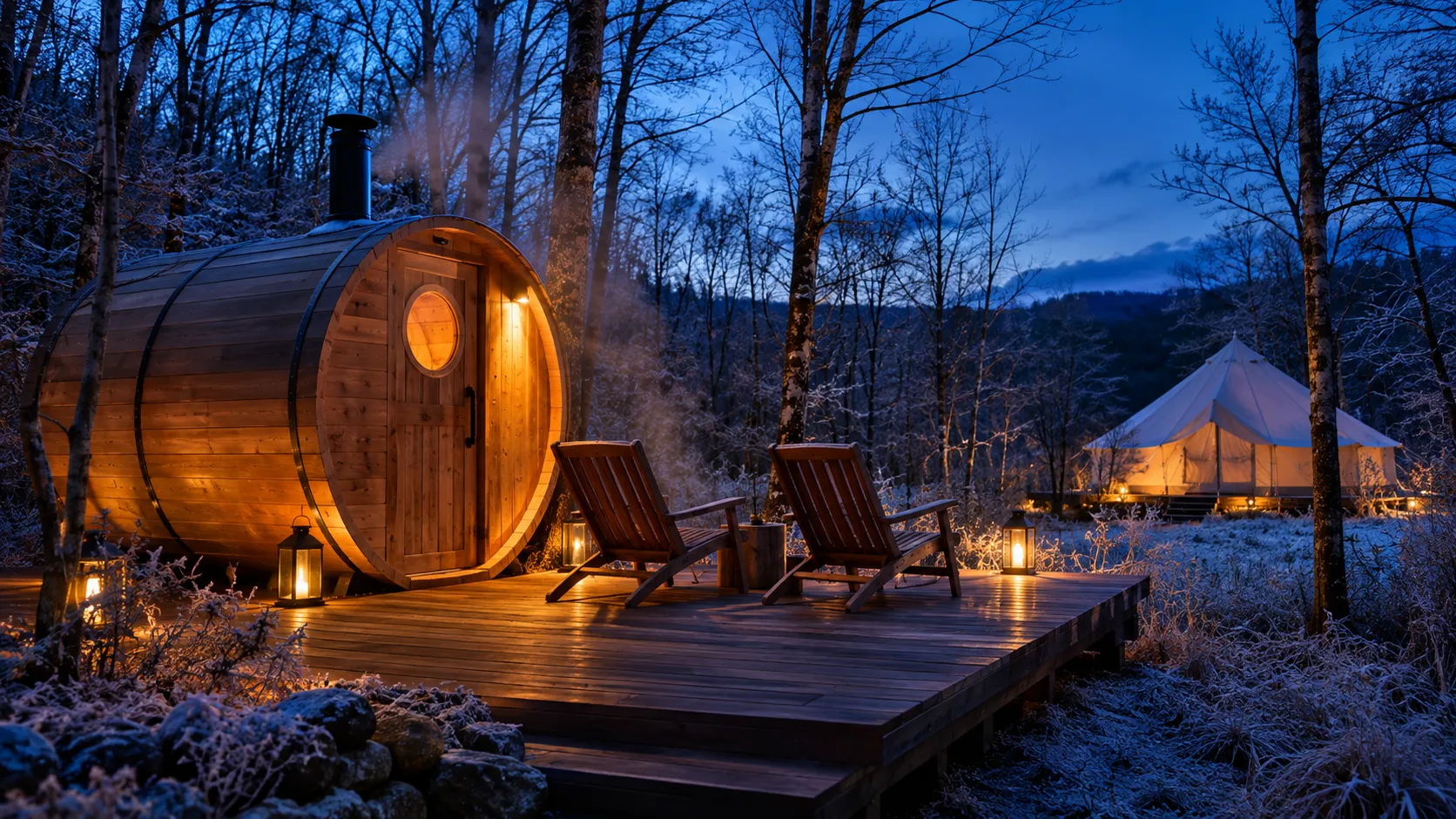
Sauna glamping is the answer to that problem, and it has arrived fast. Japan has been in the middle of a sauna boom for several years, and over the last two it has moved outdoors. There are now more than twenty glamping facilities with saunas in the Kanto region alone, and new resorts around Lake Yamanaka and across Chiba are being designed around a barrel sauna rather than around the BBQ.
The key difference: these saunas are usually private to your unit. No communal room, no strangers, no rules about what you can wear.
Why This Matters for International Visitors
Traditional Japanese bathing has three features that stop a lot of people:
A private sauna at your glamping site removes all three at once. You use it with whoever you came with, wearing whatever you like, on your own schedule. For many guests it turns "the thing I was nervous about" into the best part of the stay.
If you do want the authentic communal experience, that's still available at most resorts and worth doing — I cover the etiquette in my guide to what actually happens on the day. But it's no longer the only option.
The Three Types You'll Encounter
Barrel sauna
A wooden barrel-shaped cabin, usually seating two to four, attached to or beside your unit. Most are electric, running around 80–90°C, and many let you pour aromatic water over the stones (löyly).
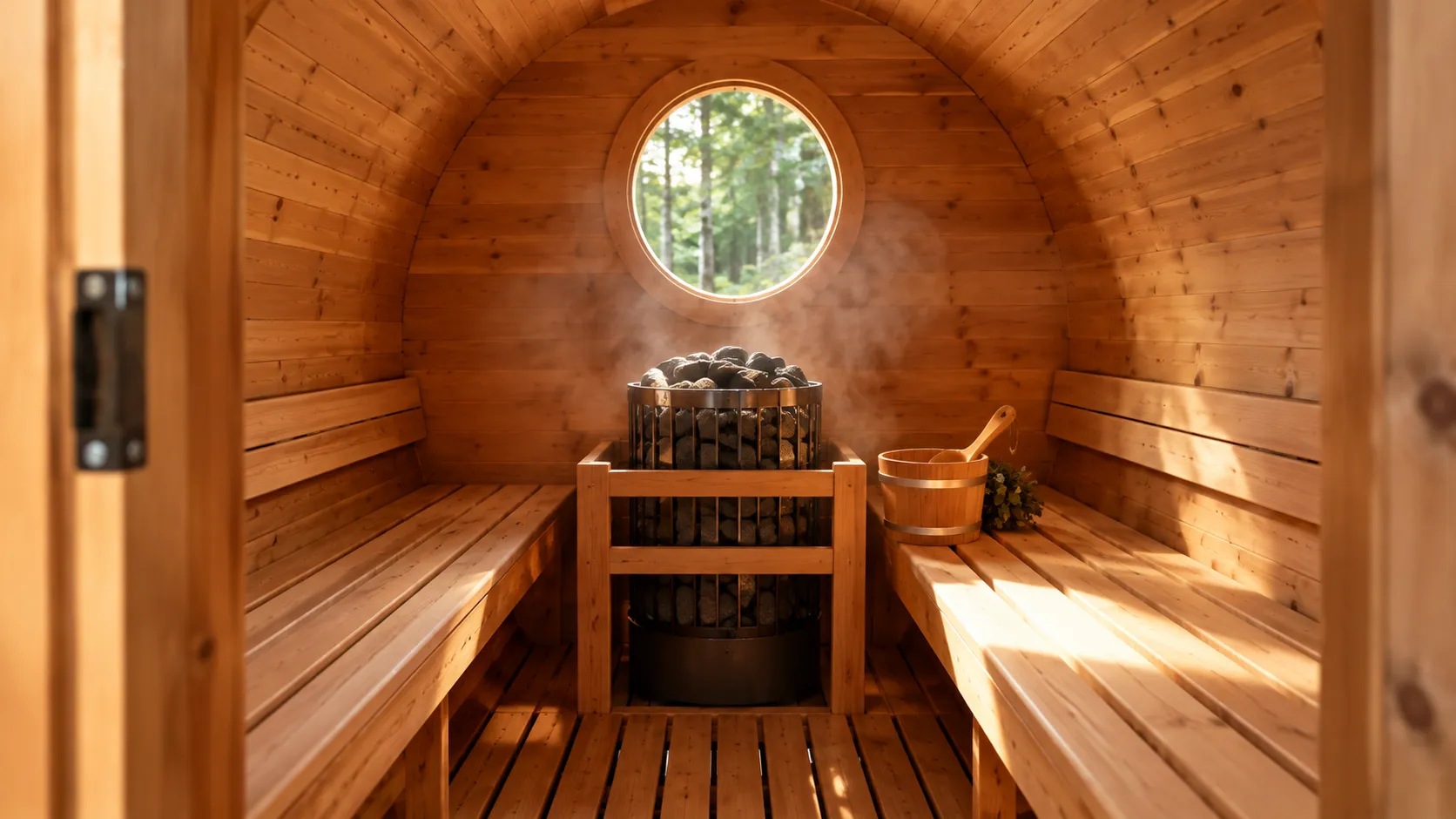
This is the most common setup at Japanese glamping resorts, and the most comfortable for first-timers — it's enclosed, warm rather than brutal, and entirely yours.
Tent sauna
A portable sauna tent, typically pitched by a lake or river, heated by a wood stove. Hotter, smokier, more elemental — and positioned so you can walk straight from the heat into cold water.
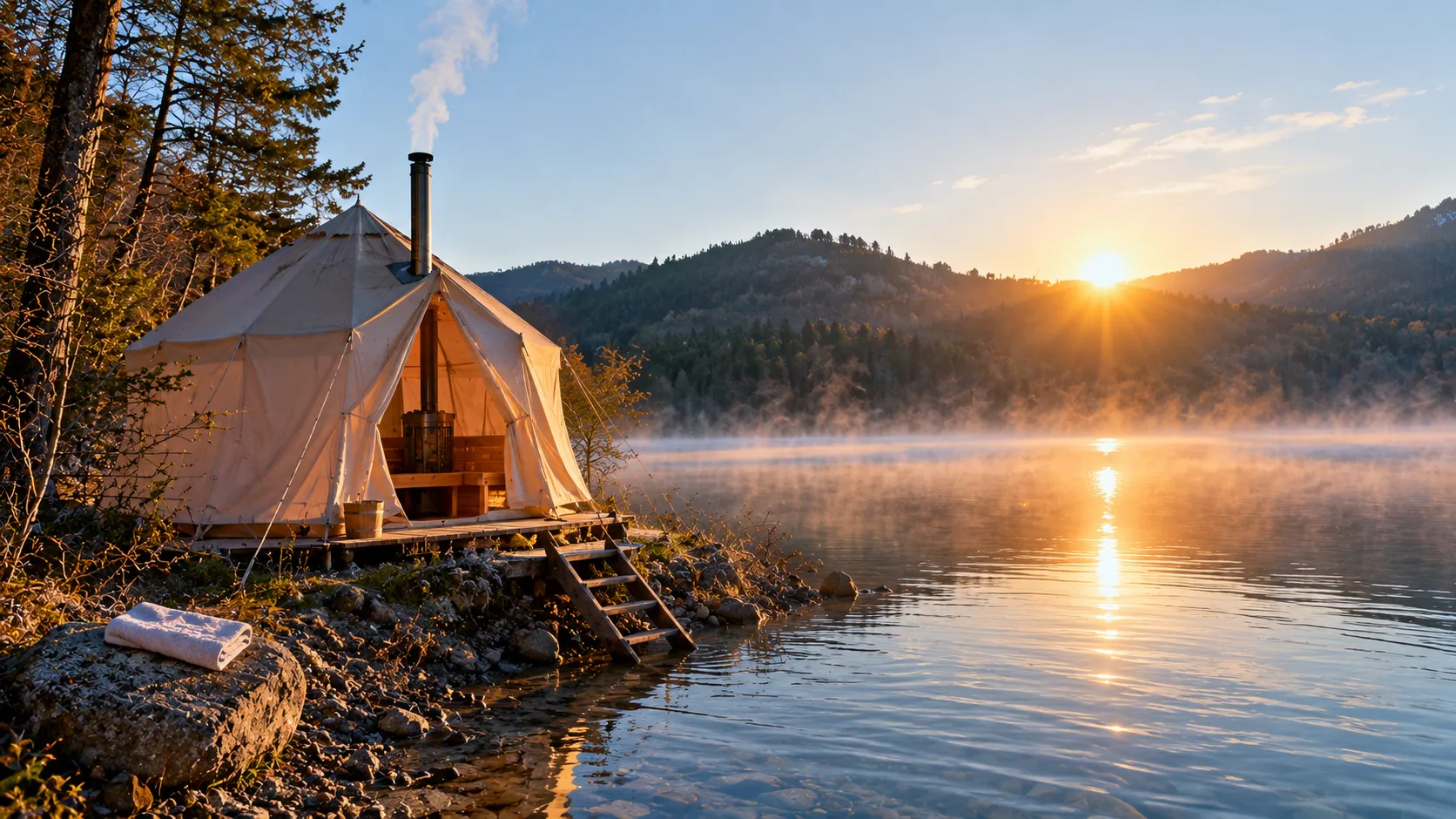
This is the one to seek out if you want the full ritual. Resorts around Lake Yamanaka and riverside sites in Yamanashi are where these cluster.
In-villa sauna with hot spring
The premium version: a private villa with both a natural hot spring bath and a sauna inside your own space. New resorts in Fujikawaguchiko are opening with exactly this combination — sixteen villas with private onsen and sauna in one case.
Expect to pay accordingly, but you get the entire Japanese bathing culture without ever entering a shared room.
"Totonou" — What You're Actually Aiming For
If you spend any time around Japanese sauna culture you'll meet the word ととのう (totonou). It translates roughly as "to be aligned" or "to be in order," and it describes the specific calm, clear-headed state you reach after cycling through heat, cold, and rest.
It is not about enduring the heat. It's about the contrast.
The standard cycle:
Repeat two or three times. Then stop. Hydrate between every round.
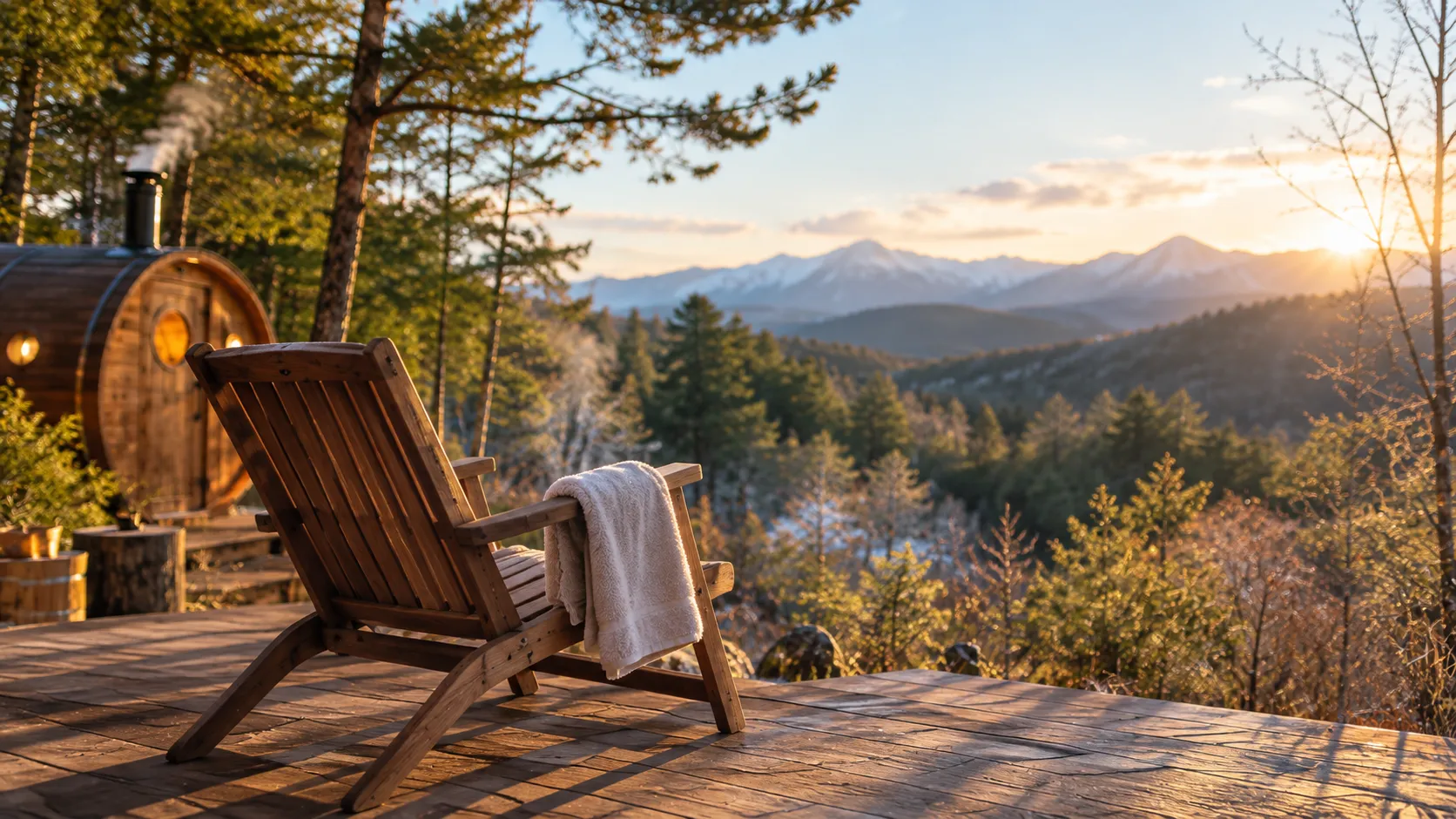
At a glamping site the third step is the reason this works so well: you rest in a chair outside your tent, in forest air, often with a fire going. That's a markedly better recovery spot than a tiled room in a city bathhouse.
Where to Find It
Named places, so you're not searching blind:
| Resort | Area | Setup |
|---|---|---|
| Retreat Glamping Chiba Kameyama | Kimitsu, Chiba | Private barrel sauna per unit, plus hot spring. Electric, 80–90°C, seats three |
| THE BONDS Beach SPA Resort | Onjuku, Chiba | In-room barrel sauna and jacuzzi, lava-stone sauna, built around totonou |
| Private Villa Glamping Fuji Yamanakako | Lake Yamanakako | Barrel sauna, private onsen and pool per villa |
| AWAUMI Fuji Kawaguchiko Resort | Fujikawaguchiko | New build: 16 villas, each with natural hot spring bath and sauna |
Chiba is the surprise here. It's the closest glamping region to Tokyo — 60 to 90 minutes — and it has quietly become one of the strongest areas in the country for sauna glamping. If you want this experience on a short trip, Chiba beats the Fuji area on travel time without giving much up.
Prices and availability move, and new sites open constantly in this category, so check current listings rather than trusting any list for long. My comparison of six resorts covers the broader options.
Practical Notes
Pack swimwear. This is the single most common omission. Private glamping saunas are generally fine with swimwear — unlike a traditional communal bath — and most guests prefer it. See my packing guide for the rest.
Book the sauna, not just the room. At some resorts the sauna is a separate reservation or an add-on with a time slot, not something included with every unit. Confirm when you book that the room type you've chosen actually includes it.
Winter is the best season for this. The contrast is the entire experience, and stepping from 85°C into near-freezing air is a different order of thing than doing it in August. Winter also has the clearest Mount Fuji views and the lowest rates — see my season guide.
Don't drink alcohol in the cycle. Save the beer for after you've finished. Dehydration plus heat plus cold is a genuinely bad combination.
Check the tattoo policy if it applies to you. Private saunas are usually not an issue at all, but any shared facility at the same resort may still have restrictions. Ask when you book rather than at check-in.
Common Questions
Do I have to be naked in a glamping sauna?
No. Private saunas attached to your unit are yours to use however you like, and swimwear is normal. The nude rule applies to traditional communal baths and public onsen, not to a barrel sauna on your own deck.
Can couples and families use it together?
Yes — that's much of the appeal. Private saunas aren't gender-segregated, so you're not split up the way you would be at a public bathhouse.
Is it safe to do the cold plunge in winter?
Yes, with sense. Keep it short (30–90 seconds), never go straight in after alcohol, and get out if you feel lightheaded rather than pushing through. The rest step afterwards matters as much as the cold.
Does a sauna add much to the price?
Typically yes — expect a meaningful premium over an equivalent room without one, especially for an in-villa onsen-and-sauna combination. My cost guide covers the pricing tiers.
Can I do this without a car?
Harder than standard glamping, since many sauna sites are rural. The Lake Yamanakako and Fujikawaguchiko properties are the most realistic by bus and shuttle — see my car-free guide.
Is a tent sauna better than a barrel sauna?
Different, not better. A tent sauna by water is more atmospheric and usually hotter; a barrel sauna is more comfortable and easier to control. For a first experience, start with the barrel.
How to Book
For accommodation, Booking.com lists Japanese glamping properties in English with live pricing and flexible cancellation on most listings. Search "glamping Chiba," "glamping Yamanakako," or "glamping Kawaguchiko," and check each property's facility list for a sauna — it's often named in the room type rather than the headline.
For activities around your stay, GetYourGuide covers Fuji-area tours and outdoor experiences with English booking and free cancellation on most bookings.
The Bottom Line
If Japanese bathing culture appealed to you but the communal, nude, gender-separated version didn't, this is your version of it.
Book a Chiba site with a private barrel sauna for the shortest trip from Tokyo, or a Yamanakako villa if you want the sauna with a Mount Fuji morning. Go in winter. Bring swimwear. And don't skip the sitting-outside part — that's where the whole thing actually lands.
Ready to explore Japan's outdoors?
Book your stay and your activities with English-language support, international payments, and flexible cancellation.